

Homer Glen just shut the FLOCK down.
At least for now.
On August 31, the Village announced that it was suspending use of its Flock automated license plate-reader cameras while a Will County Sheriff's deputy remains on administrative leave pending an internal affairs investigation into potential policy violations.
The Village specifically cited the limited information currently available and the privacy concerns at issue. The cameras will remain suspended pending the outcome of the investigation and a review of the Sheriff's automated license plate-reader protocols.
But there's an important piece of Homer Glen history that makes this much more interesting.
Residents had already voted against license plate readers.
In an April 2023 advisory referendum, 60.36% of Homer Glen voters said no to installing and using license plate readers on public access roads. The certified vote was 3,430 against and 2,253 in favor.
The referendum was nonbinding, so the Village Board was not legally required to follow the result.
And in December 2025, the Board ultimately approved a contract for 12 Flock cameras by a 5-1 vote.
Now, less than a year later, Homer Glen has suspended access to the cameras while questions about potential misuse and privacy are investigated.
That gives this story a very different context.
Residents voted no. The Board approved the cameras anyway. Now the Village itself has hit pause.
Quick Summary
- Flock cameras automatically capture passing vehicles and turn those sightings into searchable data.
- You do not have to be suspected of a crime for your vehicle to be recorded.
- In April 2023, Homer Glen voters rejected an advisory referendum on license plate readers, with 60.36% voting no.
- In December 2025, the Homer Glen Village Board approved 12 Flock cameras by a 5-1 vote.
- As of September 1, 2026, Homer Glen's mayor said five of the 12 approved cameras had been installed.
- On August 31, Homer Glen suspended use of its Flock cameras pending a Will County Sheriff's investigation and review of the Sheriff's ALPR protocols.
- On August 20, 2026, the Will County Board renewed agreements involving Flock cameras used by Frankfort, Mokena, Manhattan, Crete, Naperville and Wilmington.
- Frankfort has three documented Flock cameras along Laraway Road, while New Lenox publicly addressed its own Flock system in August 2026.
- Illinois has previously investigated improper sharing of automated license plate-reader data with federal agencies.
- Flock announced stronger privacy and accountability safeguards in August 2026, including a new recommended seven-day default retention period.
- Residents can look for reported cameras at DeFlock.org and search available public Flock audit records through HaveIBeenFlocked.com.
Latest Flock Camera Updates Around the Southwest Suburbs
August 31, 2026: Homer Glen Suspends Its Flock Cameras
Homer Glen announced that it had suspended use of the Flock automated license plate-reader cameras located within the Village.
The decision followed news that a Will County Sheriff's deputy had been placed on administrative leave pending an internal affairs investigation involving potential policy violations.
The Sheriff's Office has not publicly detailed the alleged policy violations while the investigation remains open.
Homer Glen didn't wait for the investigation to finish.
The Village said that because of the limited information currently available and the privacy concerns involved, it was suspending use of the cameras until the investigation is resolved and the Sheriff's ALPR protocols are reviewed.
There's another reason the Sheriff's policies matter specifically to Homer Glen: the Village contracts with the Will County Sheriff's Office for its police services.
CBS Chicago reported that law-enforcement access had been shut off to the five Flock cameras already installed in Homer Glen. The Village had approved 12 cameras in total.
For people who have been asking local governments to slow down and scrutinize these systems before expanding them, Homer Glen's decision is significant.
A local government actually hit pause.
Homer Glen Residents Had Already Voted No
The August suspension didn't happen in a vacuum.
Homer Glen residents had already been asked directly whether they wanted license plate readers in the Village.
On April 4, 2023, voters considered this advisory question:
Should Homer Glen install and use license plate readers on public access roads designated by the Village Board to support public safety agencies, with the data kept confidential and generally destroyed within 30 days?
The answer from voters was pretty clear.
- No: 3,430 votes, 60.36%
- Yes: 2,253 votes, 39.64%
The referendum was advisory and nonbinding, which meant the Village Board still had the legal authority to move forward later.
And that's exactly what happened.
December 10, 2025: The Board Approves 12 Cameras Anyway
More than two years after residents rejected the advisory referendum, the Homer Glen Village Board considered a new Flock proposal.
The Board ultimately approved the contract by a 5-1 vote.
The agreement called for 12 license plate-reader cameras.
During the meeting, Trustee George Lenzi Lepore opposed the proposal and specifically pointed back to the referendum result, arguing that the Village should respect what residents had already said.
Other trustees supported moving forward, citing public-safety benefits and the ability of the cameras to help law enforcement investigate stolen vehicles, violent crimes and missing persons.
So there were legitimate arguments on both sides.
But the political history is hard to ignore:
April 2023: Residents vote 60.36% against license plate readers.
December 2025: The Village Board approves 12 Flock cameras by a 5-1 vote.
August 2026: A Will County Sheriff's deputy is placed on administrative leave during an investigation involving potential policy violations.
August 31, 2026: Homer Glen suspends use of its Flock cameras while the investigation and ALPR policy review continue.
That doesn't mean the Village did anything illegal by approving the cameras after the referendum. The referendum was advisory.
But it does mean residents who opposed the cameras now have an obvious reason to say:
"We already told you we didn't want this."
August 20, 2026: Will County Renews Local Flock Agreements
Just 11 days before Homer Glen suspended its cameras, the broader Will County story was moving in the opposite direction.
The Will County Board voted to renew agreements allowing municipalities to place Flock cameras within county property and rights of way.
The agreements involved cameras used by:
- Frankfort
- Mokena
- Manhattan
- Crete
- Naperville
- Wilmington
The agreements had already generated debate over privacy, oversight and how the information collected by these systems can be accessed.
Police officials continue to argue that automated license plate readers are valuable investigative tools that help identify stolen vehicles, locate suspects and generate leads.
Privacy advocates argue that the same system creates a searchable history of ordinary vehicles whose owners aren't suspected of committing anything.
Both things can be true.
That's exactly why the rules governing these systems matter so much.
This Isn't Coming. It's Already Here.
Frankfort has three Flock license plate readers along Laraway Road. Because those cameras sit along a county highway, the Village has needed an intergovernmental agreement with Will County to keep them there.
Frankfort officials have said the cameras are valuable in criminal investigations and public-safety efforts.
Then there's New Lenox.
On August 12, the Village published a video called "Flock Cameras: What You Need to Know." Mayor Tim Baldermann and Deputy Chief Tim Perry discussed the system's benefits while responding to concerns residents have been raising about it.
I'm glad they're talking about it.
But that also tells you something:
People are finally starting to notice these things.
So What Are They Actually Recording?
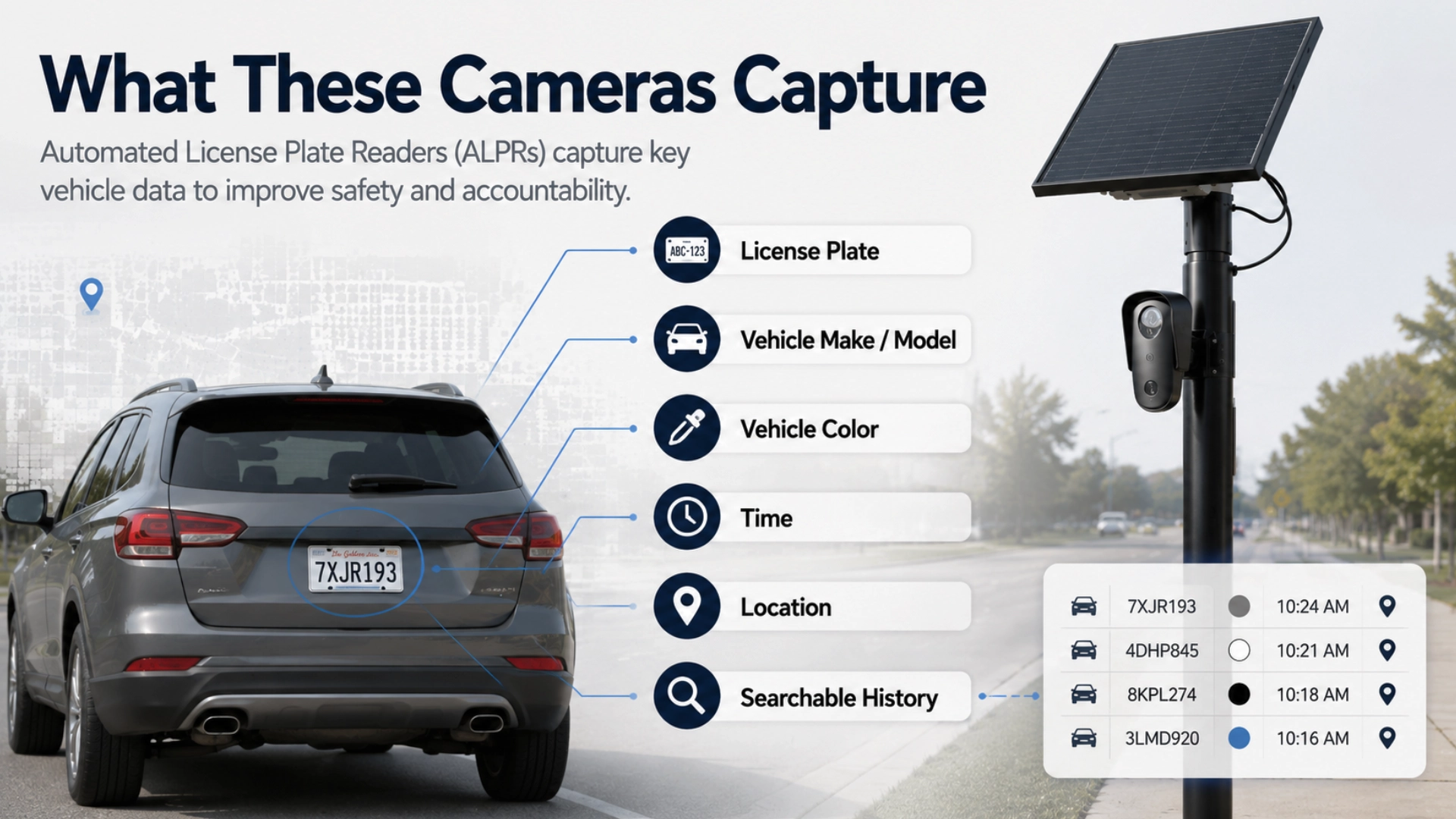
Flock's license plate readers photograph vehicles as they pass and can identify information including the plate, vehicle type, make, color and other visible characteristics.
The important part isn't one picture.
It's what happens when those sightings become searchable.
An investigator looking for a particular vehicle can potentially see where participating cameras encountered it and when. Agencies can also share access with other agencies depending on permissions, policies and the rules established by the customer controlling the data.
That's incredibly useful if you're looking for a stolen car or somebody connected to a violent crime.
It's also an incredibly powerful surveillance tool.
Here's What Happens When the Story Is Wrong
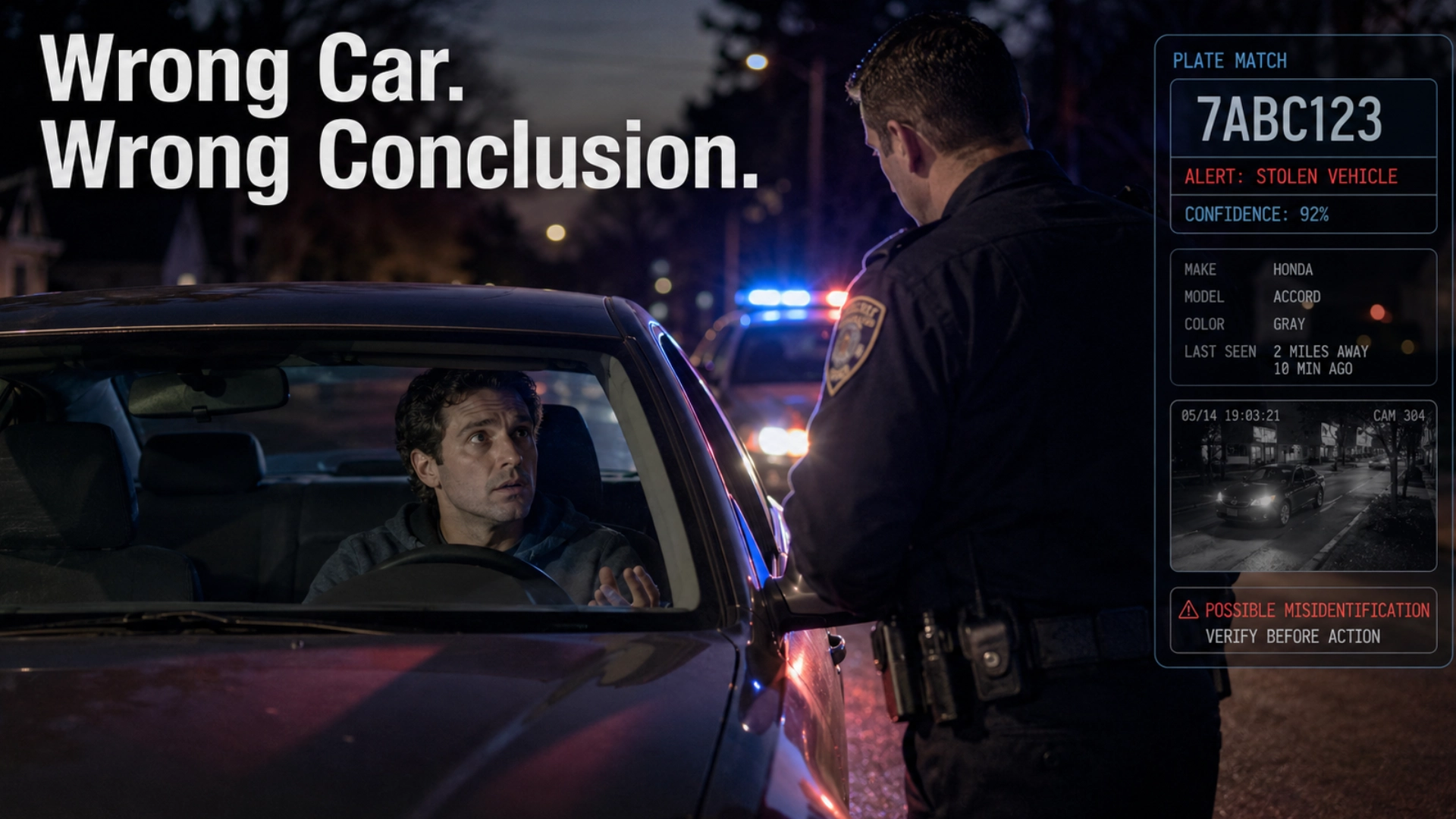
In August, police in Brookfield, Wisconsin stopped a vehicle with guns drawn after a Flock alert connected it to a Milwaukee homicide.
The people in the car weren't wanted anymore. Milwaukee police acknowledged the alert should have been removed.
The system did what it had been told to do.
The people inside the car still ended up staring at guns.
That's an important distinction.
Surveillance technology doesn't have to completely malfunction to hurt somebody.
Bad information, old information or a bad assumption can be enough.
Your Car Was There. So You Must Have Done It.
A Colorado woman named Chrisanna Elser learned that the hard way.
Police investigating a package theft used Flock records showing her green Rivian had traveled through the area around the time of the theft.
An officer eventually showed up at her home convinced she was the thief.
She wasn't.
Elser ended up gathering her own vehicle footage, timelines and other video to show where she had actually gone. The summons was eventually dropped.
Think about what happened there.
The system knew her vehicle had been nearby. Somebody decided what that meant.
That's exactly why this information should be a lead, not a verdict.
You should not need your own surveillance system just to protect yourself from conclusions drawn by somebody else's surveillance system.
The Misuse Question Isn't Hypothetical Anymore
The conversation has also changed because allegations of unauthorized use aren't limited to some theoretical future scenario.
Police departments around the country have investigated officers accused of using Flock systems for personal or otherwise unauthorized purposes.
In August 2026 alone, cases involving alleged or confirmed misuse drew attention in multiple jurisdictions.
A former Kenosha County Sheriff's deputy was charged after authorities said he used Flock technology to track a fellow deputy for an unauthorized personal purpose.
Closer to home, municipalities and police agencies around the Chicago region have also opened investigations involving potential unauthorized use.
And now a Will County Sheriff's deputy is on administrative leave while an internal investigation continues.
This is exactly why access controls and audits matter.
A surveillance database doesn't need to be hacked by some mysterious outsider to create a privacy problem.
An authorized user can misuse legitimate access.
Illinois Already Found a Much Bigger Data-Sharing Problem
This isn't only about individual officers.
In 2025, the Illinois Secretary of State audited Flock's network and said license plate information from Illinois had been improperly accessible to federal agencies in ways that violated state restrictions.
Illinois law limits the use and sharing of automated license plate-reader data for certain immigration and reproductive-health investigations.
The audit found that safeguards had not been strong enough to prevent prohibited access.
Flock disputed parts of the state's legal interpretation but acknowledged problems with its protocols and later ended federal pilot programs that had drawn scrutiny.
This is the problem with building the infrastructure first and figuring out all of the guardrails later.
Once the system exists, the argument moves from whether we should create the database to who should be allowed inside it.
Flock Is Tightening Its Own Rules
Flock itself has responded to the growing concerns.
On August 13, the company announced a series of privacy, accountability and security changes.
One of the biggest involves data retention.
Flock changed its recommended default retention period from 30 days to seven days and introduced an "Evidence Mode" allowing specific records connected to active investigations to be preserved when needed.
Existing customers can retain their current locally approved retention periods rather than automatically moving to seven days.
The company has also announced stronger case-code requirements, expanded automated monitoring for unusual searches, additional auditing tools and the ability to lock users out when suspicious behavior is detected.
Those are meaningful safeguards.
But they also reinforce an important point.
Concerns about who searches this information, why they search it and how long it exists are not imaginary.
Want to Know What's Around You? Go Look.
This is where the story gets personal.
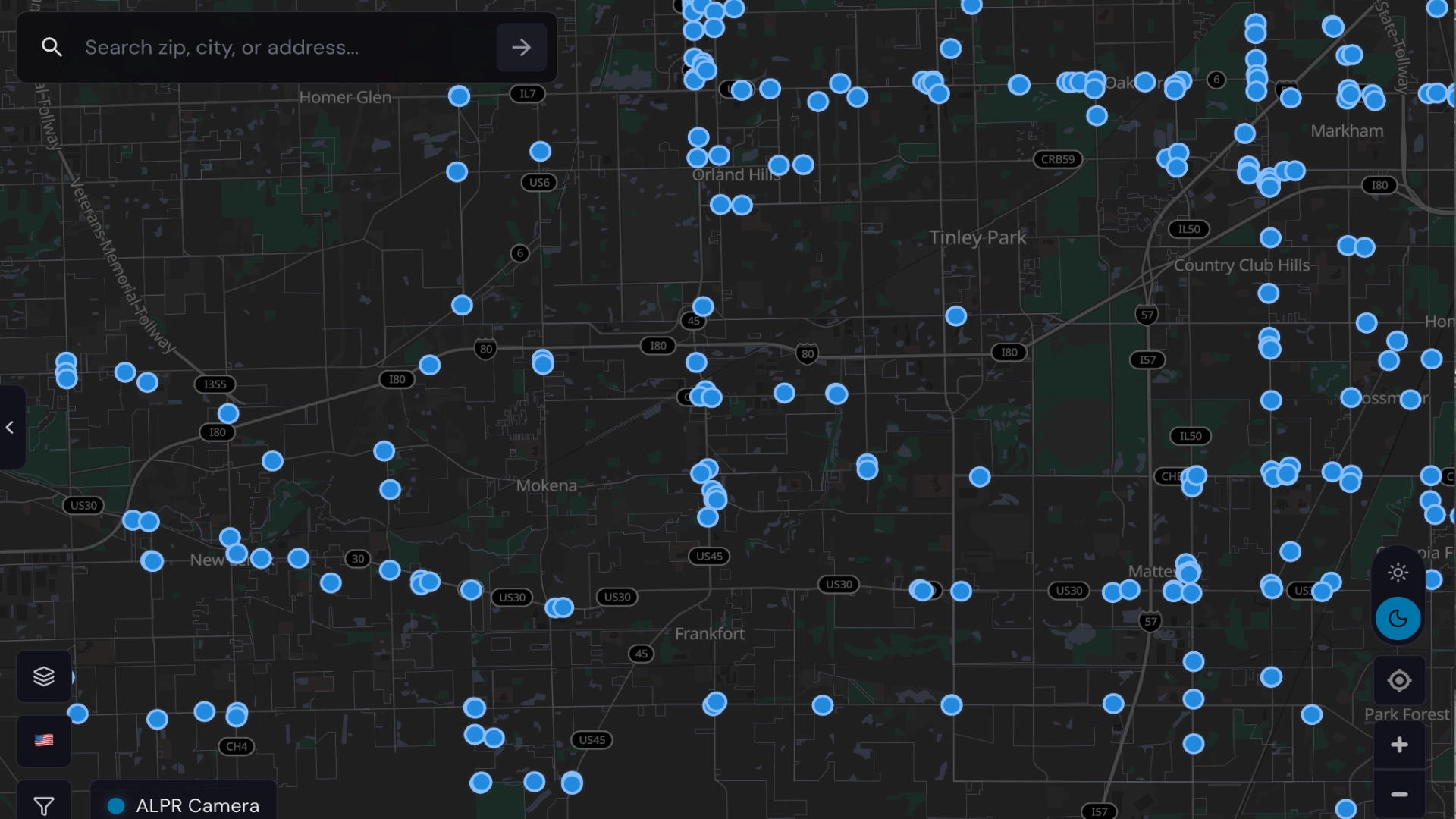
Go to DeFlock.org.
It's an independent map of reported automated license plate readers.
Zoom into the southwest suburbs and look at the roads you actually drive.
Look around your house. Your subdivision. The roads your family uses every day.
It isn't a complete government database, so don't assume every camera will be there. But it gives you an idea of how widespread this technology has become.
Has Your Plate Been Searched?
There's another site worth checking: HaveIBeenFlocked.com.
It compiles Flock audit records obtained through public-record requests and lets you search available records for your plate.
No result does not mean nobody has ever photographed or searched your vehicle. The site only knows about records that have actually been obtained and added to its database.
The "Nothing to Hide" Argument Misses the Point
Every conversation about surveillance eventually gets here.
"Why do you care if you're not doing anything wrong?"
Because privacy isn't something you earn by proving you're innocent.
I don't need to be committing a crime to question why there should be a searchable record of where my vehicle has been.
I don't care whether the record shows I live the most boring life in Illinois.
Why does the record need to exist?
And What Happens When This Becomes Normal?
This may be the part that concerns me most.
A three-year-old growing up today may never remember a world where cameras weren't automatically logging vehicles, doorbell cameras weren't covering every block and databases weren't piecing all of it together.
To them, being tracked may eventually feel completely ordinary.
That's how the line moves.
You don't wake up one morning in some science-fiction surveillance state.
You approve one reasonable use. Then another. Then somebody connects another camera. Then another database.
Eventually nobody remembers where the original line was.
Private Cameras Create Another Question
Flock also sells its technology to businesses, neighborhoods and other private customers, and Flock says those customers can choose to share their data with law enforcement under applicable permissions and policies.
That's another line worth talking about.
If a business wants cameras watching its parking lot and protecting its property, I understand that.
But I don't think a private company should be building a searchable record of everybody driving down a public road.
Private property? Protect it.
Public traffic? That's where I say the camera should stop.
Before Another Camera Goes Up, Ask These Questions
This shouldn't require a law degree or a stack of Freedom of Information requests.
Residents should be able to find out:
- How many cameras their town operates.
- Where those cameras are located.
- How long vehicle data is retained.
- Who is permitted to search it.
- What reason or case number must be entered before conducting a search.
- Which outside agencies can access the information.
- How searches are audited.
- What happens when somebody violates the policy.
"It helps us solve crimes" is a reason to have the conversation. It isn't a blank check.
Homer Glen Just Proved the System Can Be Paused
That's what makes the latest local development interesting.
For all the arguments that this technology is already too widespread to do anything about, Homer Glen just showed that local governments still have choices.
And in Homer Glen, that matters even more because residents had already voted against installing the cameras in the first place.
The Village didn't rip every camera out of the ground.
It didn't announce that automated license plate readers can never be useful.
It said there were unanswered questions involving privacy and policy, so it was stopping the system while those questions were examined.
That seems pretty reasonable to me.
If the technology is trustworthy, the review should help demonstrate that.
If the safeguards aren't good enough, fix them before turning the cameras back on.
And if residents ultimately decide the tradeoff isn't worth it, well, they already had an opportunity to answer that question once.
Sixty percent of them said no.
We Don't Have to Accept This as Normal
I understand why police departments like these systems.
They can help find stolen vehicles, locate suspects and generate useful leads.
I'm not pretending those benefits aren't real.
But the tradeoff is real too.
We're building the ability to track ordinary people who haven't done anything wrong.
Once that infrastructure is everywhere, getting rid of it becomes a lot harder than simply deciding not to build it in the first place.
So look around.
Check DeFlock. Ask your village. Look at the little black cameras sitting beside the roads you drive every day.
Then decide for yourself.
How much of your life should anybody be able to search just because you left your driveway?
- Flock automated license plate readers are already in use around the southwest suburbs.
- Homer Glen voters rejected an advisory referendum on license plate readers in April 2023, with 60.36% voting no.
- The Homer Glen Village Board later approved 12 Flock cameras by a 5-1 vote in December 2025.
- Five of those 12 cameras had been installed as of early September 2026, according to the mayor.
- Homer Glen suspended use of its Flock cameras on August 31 while a Will County Sheriff's investigation and ALPR policy review continue.
- Will County renewed agreements on August 20 involving cameras used by Frankfort, Mokena, Manhattan and other municipalities.
- The cameras generally record passing vehicles rather than only vehicles associated with suspected crimes.
- Flock has introduced tighter privacy and accountability safeguards, including a recommended seven-day default retention period.
- Residents can use DeFlock.org to view reported camera locations and HaveIBeenFlocked.com to search certain publicly obtained audit records.
- This page will continue to be updated as local governments change their policies or add, suspend or remove Flock cameras.
Frequently Asked Questions About Flock Cameras
What is a Flock camera?
Flock Safety makes automated license plate readers that photograph passing vehicles and create searchable records containing vehicle, location and time information. The systems are commonly used by law enforcement but are also available to certain private organizations.
Did Homer Glen residents vote against Flock cameras?
Homer Glen voters rejected an advisory referendum on license plate readers on April 4, 2023. Certified election results show 3,430 voters, or 60.36%, voted no, while 2,253 voters, or 39.64%, voted yes. The referendum was advisory and nonbinding.
Why did Homer Glen install Flock cameras after voters rejected them?
Because the 2023 referendum was advisory and nonbinding, the Village Board retained the authority to approve the cameras later. On December 10, 2025, the Board voted 5-1 to approve a contract covering 12 Flock license plate readers.
Did Homer Glen shut down its Flock cameras?
Homer Glen suspended use of its Flock automated license plate-reader cameras on August 31, 2026. The suspension is temporary while a Will County Sheriff's internal investigation continues and the Sheriff's ALPR protocols are reviewed.
Why did Homer Glen suspend its Flock cameras?
The Village cited limited information surrounding an internal investigation involving a Will County Sheriff's deputy along with privacy concerns related to automated license plate-reader use. The Village said the cameras would remain suspended pending the investigation and a review of the Sheriff's ALPR protocols.
How many Flock cameras are in Homer Glen?
The Village approved 12 Flock cameras in December 2025. Homer Glen Mayor Christina Neitzke-Troike told CBS Chicago in September 2026 that five of the 12 approved cameras had been installed.
Are Flock cameras being used in Frankfort and Mokena?
Yes. Frankfort has documented Flock cameras along Laraway Road, and both Frankfort and Mokena were among the municipalities included in Will County agreements renewed in August 2026 involving cameras located within county rights of way.
Do Flock cameras only photograph suspected criminals?
No. The cameras generally capture passing vehicles. Investigators can later search available records when looking for a vehicle connected to an investigation.
How long does Flock keep license plate data?
Flock announced in August 2026 that its recommended default retention period is changing from 30 days to seven days. Existing customers can continue using locally approved retention periods, and specific information associated with active investigations may be preserved under applicable policies.
How can I find Flock cameras near me?
DeFlock.org maintains an independent public map of reported automated license plate readers. The map is crowdsourced and should not be treated as a complete list of every camera.
Can I find out whether my license plate was searched?
HaveIBeenFlocked.com allows users to search certain Flock audit records obtained through public-record requests. Its database is incomplete, so a plate not appearing in the results does not mean it has never been photographed or searched.
Sources & Public Records
- Village of Homer Glen, FLOCK Update, August 31, 2026
- Will County, Official Results, April 4, 2023 Consolidated Election
- Village of Homer Glen, 2023 License Plate Reader Referendum Information
- Village of Homer Glen, March 8, 2023 Board Minutes, advisory and nonbinding referendum information
- Village of Homer Glen, December 10, 2025 Board Minutes, Flock camera approval
- CBS Chicago, Homer Glen pauses Flock cameras, September 1, 2026
- Village of Homer Glen, Will County Sheriff's Office police-services information
- CBS Chicago, Will County renews Flock agreements, August 20, 2026
- Village of Frankfort, 2026 Committee of the Whole materials regarding Flock cameras on Laraway Road and the Will County intergovernmental agreement.
- Village of New Lenox, "Flock Cameras: What You Need to Know," August 2026
- Illinois Secretary of State, Flock Safety audit
- Flock Safety, August 2026 privacy, retention and accountability changes
- FOX6 Milwaukee, Brookfield Flock alert traffic stop
- CBS Colorado, Chrisanna Elser wrongful package-theft accusation
- DeFlock, public ALPR map
- Have I Been Flocked? Public Flock audit-record search
Update Note: Investigations, municipal policies, camera locations and Flock's product safeguards can change. The 2023 Homer Glen referendum was advisory and nonbinding. This page is intended to remain an ongoing resource and will be updated as significant local developments occur.