

Amazon's massive Matteson fulfillment center didn't just change one property at Harlem Avenue and Vollmer Road. Tinley Park's own planning records say it changed the market and vision for nearby land. Across Vollmer, a roughly 111-acre industrial development won approval in 2021, yet the proposed buildings remain a development opportunity years later. Here's what was approved, what the more recent marketing plans show, and what residents of Frankfort Square and southern Tinley Park should know.
Updated October 19, 2026.
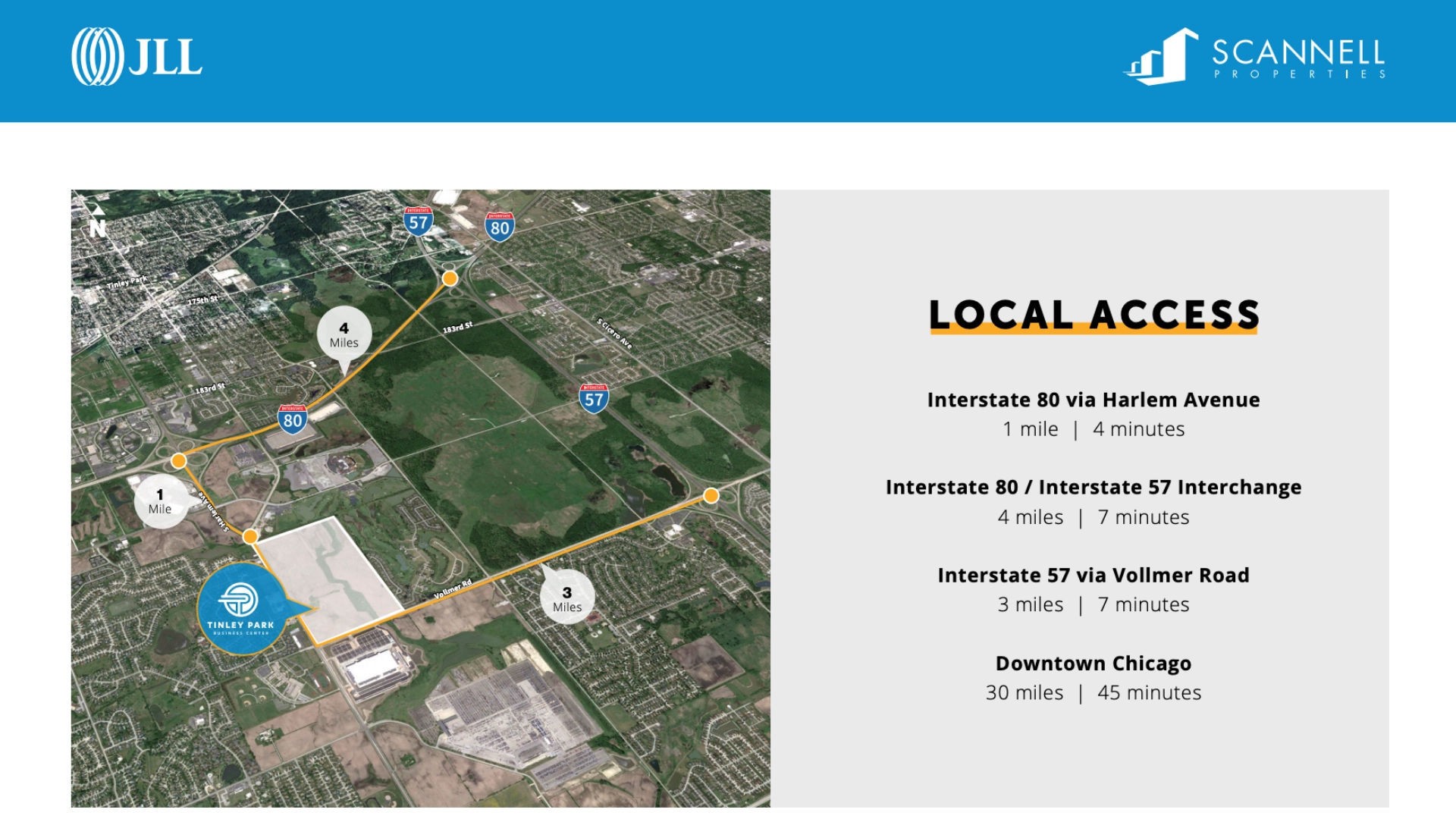
If you drive through Harlem Avenue and Vollmer Road, it's hard to miss how much the surrounding area has changed. Amazon's fulfillment center in Matteson is a massive presence. And directly across Vollmer Road, on the northeast corner, sits another large piece of land with its own industrial future on paper.
What's interesting isn't only the size of the proposed Tinley Park Business Center. It's that the Village of Tinley Park acknowledged in 2021 that Amazon had changed how officials and developers viewed the surrounding area.
For people living in Frankfort Square and southern Tinley Park, that's worth paying attention to. Development doesn't necessarily stop affecting a community at a municipal boundary or a property line.
How Amazon Changed the Plan for This Area
Before Amazon's fulfillment center became part of the landscape, Tinley Park's planning materials described the Harlem and Vollmer area as having more potential for commercial and entertainment uses. Those kinds of projects could have brought a very different mix of buildings, visitors, traffic and activity.
But commercial demand, site constraints and the industrial market were changing. At the June 3, 2021 Plan Commission meeting, Senior Planner Dan Ritter specifically identified the new Amazon facility in Matteson as having changed both the market and the vision for the area.
That's a significant statement. Amazon wasn't the only factor behind the shift, but the village's own records connect its arrival to the way the land across Vollmer was being reconsidered.
What Tinley Park Approved in 2021
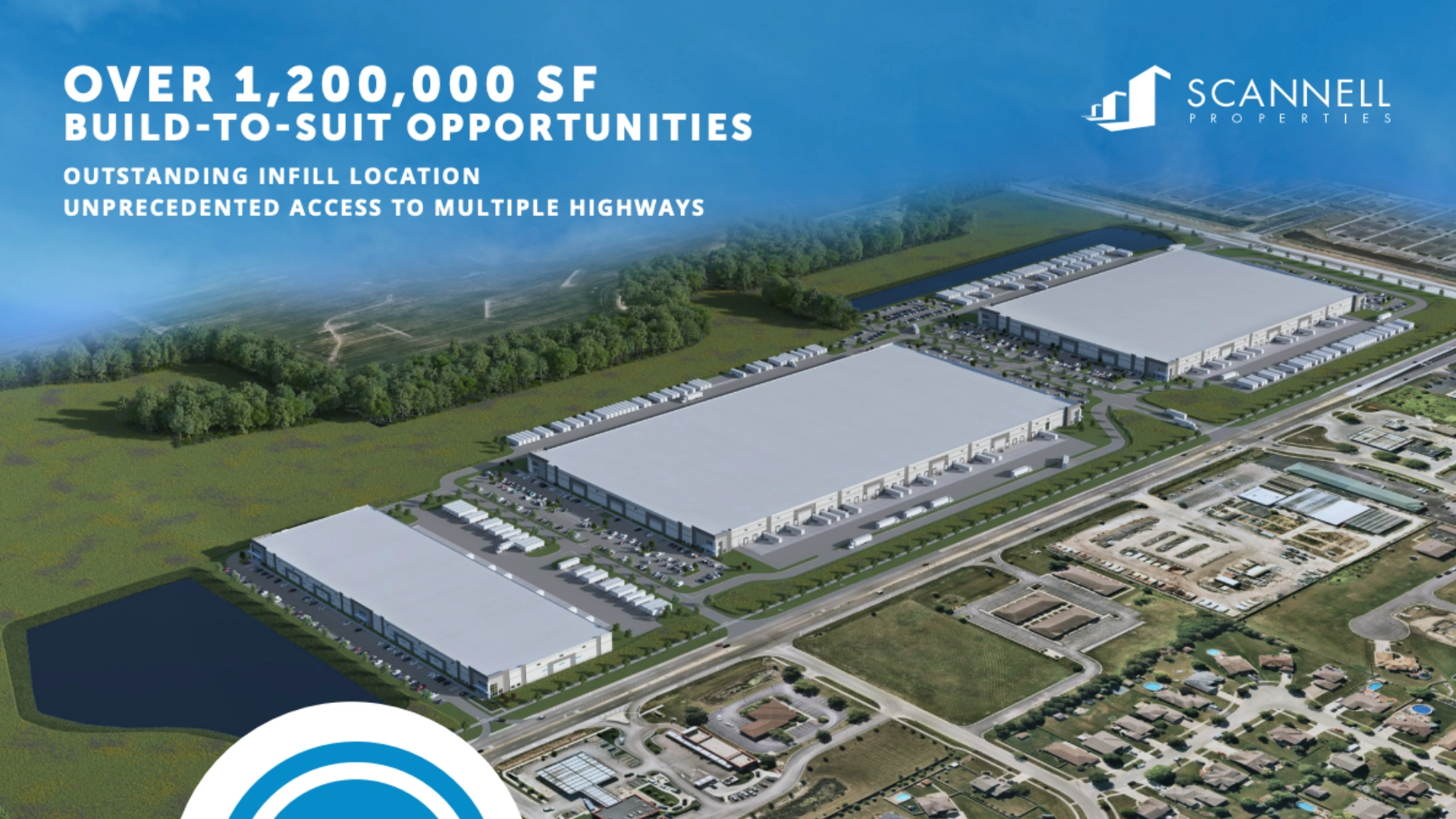
In 2021, Scannell Properties was identified in village records as the contract purchaser and developer behind the Tinley Park Business Center, a proposed industrial campus covering approximately 110.94 acres at 19501–19701 Harlem Avenue.
The original proposal contemplated approximately 1.26 million square feet of light industrial space, developed in phases. The Village Board approved annexation, rezoning and the planned unit development in 2021. A proposed first building of approximately 195,000 square feet also received site-plan consideration as part of the approval process.
These were real development approvals, not simply a sketch of what someone hoped to build. But an approved development is not the same thing as completed construction, a signed tenant lease or an announced groundbreaking.
What the Most Recent Marketing Plans Show
An August 2025 JLL and Scannell Properties brochure continued to market the property as a build-to-suit industrial campus. It offered different possible building configurations rather than presenting just one unchangeable final layout.
One concept showed three buildings: 195,000 square feet, 604,800 square feet and 462,500 square feet. Together they total approximately 1,262,300 square feet.
A second concept was even more striking. It paired the same 195,000-square-foot building with a 1,010,500-square-foot industrial building, essentially concentrating much of the campus into one enormous structure.
Current JLL property listings continue to advertise build-to-suit opportunities for individual buildings. That indicates the property is still being offered to prospective industrial occupants. It does not tell us that a tenant has committed, that the land has changed hands, or when construction will begin.
What Would This Mean for Nearby Residents?
The obvious concern is trucks. Depending on the eventual tenants, distribution and warehouse buildings could create additional truck movements in the corridor. The site plans show industrial loading areas, but we should not turn the number of proposed loading docks into a claim about how many trucks will travel Harlem or Vollmer every day. Actual traffic would depend on the businesses occupying the buildings and on required traffic controls.
Then there is the appearance of the area. Industrial buildings at this scale can change what people see along major roads, especially when an area that once seemed suitable for shops or entertainment instead becomes a warehouse corridor.
Those concerns were not ignored in the original planning process. The 2021 Plan Commission record references landscaped buffers, circulation, lighting and screening, along with a condition requiring installation of a landscape berm along Harlem Avenue during Phase 1.
That's useful context, but landscaping doesn't erase the scale of a million-square-foot development. And approval conditions only tell us what was required under the applicable plans; they don't prove what has actually been built.
Five Years Later, Why Is the Site Still Unbuilt?
That's the question we don't yet have a documented answer to.
The site has continued to be marketed, including in the August 2025 brochure and the current JLL listings. The marketing materials also advertise a Cook County Class 8 property-tax incentive. But we have not verified a current tenant commitment, a groundbreaking date, or the reason the planned buildings have not gone up.
Nor have we verified whether Scannell remains the property's current owner or contract purchaser. The records establish its role in the original proposal and its appearance in the 2025 marketing materials, not every detail of the present ownership structure.
There has also been discussion of a separate $85,000 Tinley Park TIF and development advisory study in 2026. At this point, however, the publicly reviewed September meeting materials do not name the Tinley Park Business Center or Scannell as the developer requesting assistance. We cannot responsibly treat that study as financing for this project without a documented link.
The Larger Question for Harlem and Vollmer
Development in this part of the southwest suburbs isn't simply about whether one more warehouse gets built.
In 2021, Tinley Park's own planning discussion connected Amazon's arrival to a broader shift in development expectations. The proposed Tinley Park Business Center is a concrete example of what that shift could look like: a large industrial campus across Vollmer instead of some of the commercial and entertainment possibilities once associated with the area.
For Frankfort Square and southern Tinley Park residents, the questions now are fairly practical. What ultimately gets built? Where will trucks travel? How well will the site be screened? And how will the next wave of development shape this corridor over the coming decade?
The buildings aren't there yet. But the decisions about what this area could become started years ago.
I'll keep following the project as new plans, permits or tenant announcements become available.
Have you noticed changes around Harlem and Vollmer since Amazon arrived? Let me know what you're seeing.
Sources and Public Records
- Village of Tinley Park, June 3, 2021 Plan Commission meeting minutes (included in the June 17, 2021 Plan Commission packet), Item 3, Tinley Park Business Center.
- Village of Tinley Park, June 29, 2021 Village Board approvals, Ordinances 2021-O-034, 2021-O-035 and 2021-O-036.
- JLL / Scannell Properties, Tinley Park Business Center marketing brochure, August 2025 (PDF).
- Tinley Park Business Center project marketing website.
- JLL, Tinley Park Business Center current Building 1 listing.
Project-status note: The 2021 municipal approvals and August 2025 marketing concepts are historical documents. Marketing plans may differ from approved construction drawings and may change in response to tenants, engineering and new submissions. The site is being marketed, but a current construction start date, tenant commitment and present ownership have not been independently confirmed. Traffic and neighborhood impacts discussed above are potential effects, not measured effects of unbuilt structures.