

Quick Summary
- Frankfort Square is an unincorporated Will County community with a Frankfort mailing address, but it is not governed by the Village of Frankfort.
- It generally offers some of the most accessible home prices in the broader Frankfort area.
- Raised ranches, bi-levels, tri-levels, smaller ranches, and older two-story homes make up much of the housing stock.
- Court Homes of Frankfort Square provides one of the area’s largest and most affordable clusters of attached condominium housing.
- The neighborhood has municipal water and sewer, an extensive park district, mature trees, established streets, and convenient access to Frankfort and Tinley Park.
Living in Frankfort Square, Illinois
Frankfort Square is one of the more misunderstood parts of the Frankfort housing market. It has a Frankfort address, shares many of the same schools and amenities, and blends almost seamlessly into nearby Frankfort and Tinley Park neighborhoods. Legally and administratively, however, Frankfort Square is an unincorporated Will County community rather than part of the incorporated Village of Frankfort.
That distinction matters, but it does not define the entire experience of living here. For most residents, daily life revolves around the neighborhood’s established residential streets, local schools, parks, walking paths, ponds, and convenient access to the shopping and services found along Route 30 and Harlem Avenue.
From a housing standpoint, Frankfort Square fills an important role. It provides a more affordable route into the Frankfort area for first-time buyers, young homeowners, downsizers, and people who want access to the Lincoln-Way area without moving directly into one of Frankfort’s larger move-up or custom-home subdivisions.
Where Is Frankfort Square?
Frankfort Square sits on the eastern side of the greater Frankfort area. Harlem Avenue serves as a useful eastern reference point, while Route 30 forms the southern edge of much of the community. St. Francis Road runs through the neighborhood and helps divide its northern and southern residential sections.
The boundaries become less obvious toward the north and west. Frankfort Square transitions into Frankfort Highlands, the Will County portion of Tinley Park, and subdivisions such as Brookside Glen. Square Links Golf Course also serves as a recognizable western reference point for part of the neighborhood.
These are practical landmarks rather than legal boundary lines. Frankfort Square does not fit neatly inside four perfectly straight roads. The borders shift and occasionally zigzag around adjoining subdivisions, park property, schools, and residential pockets.
Frankfort Square Versus Frankfort Highlands
Frankfort Square and Frankfort Highlands are frequently grouped together because the transition between them is subtle. There is no dramatic entrance sign announcing that the housing stock has changed.
Frankfort Highlands generally feels like a modest step up from Frankfort Square, with somewhat larger or more varied homes and lots in certain sections. There is still considerable overlap, however, and an updated Frankfort Square home can easily compete with an older or less updated property in Frankfort Highlands.
For buyers, the better approach is to evaluate the individual home, lot, condition, and location rather than assuming one side of an informal neighborhood boundary is automatically superior.
Frankfort Square Is Not Part of the Village of Frankfort
A Frankfort mailing address does not necessarily mean a property is located inside the incorporated Village of Frankfort. Frankfort Square is unincorporated, which affects which local agencies provide certain public services.
- Police service: Law enforcement is provided through the Will County Sheriff’s Office rather than the Frankfort Police Department.
- Water and sewer: Frankfort Square is served by the Village of Frankfort water and sewer system.
- Parks and recreation: Recreational facilities and programs are operated by the Frankfort Square Park District.
- Schools: Most properties are associated with Summit Hill School District 161 and Lincoln-Way Community High School District 210, although assignments should always be verified by property address.
This arrangement sometimes surprises buyers. Frankfort Square is unincorporated, but it does not generally function like a rural well-and-septic area. Residents receive municipal water and sewer service through the Village of Frankfort, and water softeners are common because of the hardness of the local water supply. For more on the system, household softener costs, and the Village's 2025 Lake Michigan water study, see the Frankfort water and Lake Michigan water breakdown.
Frankfort Square Housing Overview
Most of Frankfort Square was developed during the 1970s and 1980s. The result is a fairly recognizable collection of raised ranches, bi-levels, tri-levels, compact ranches, and smaller two-story homes.
The architecture may repeat from block to block, but the condition of the homes does not. One property may retain its original kitchen, bathrooms, doors, and lower-level finishes, while a nearly identical home down the street may have been completely remodeled.
That variation is one of the defining features of the market. Buyers are not simply comparing square footage. They are comparing decades of maintenance, remodeling, additions, mechanical updates, and changes made by different owners.
Well-updated homes can attract attention quickly because they allow buyers to enter the Frankfort area without immediately taking on a major renovation. Homes needing substantial work can still offer opportunity, but the price must leave enough room for the actual cost of updating them.
For broader pricing trends and the latest detached and attached market data, visit the Frankfort Housing Guide.
Common Home Styles in Frankfort Square
Raised Ranches and Bi-Level Homes

Raised ranches are among the most recognizable and common home styles in Frankfort Square. The terms raised ranch and bi-level are often used interchangeably in local real estate listings.
The front entrance typically opens onto a small landing. From there, a short staircase leads upward to the main living area, while another staircase leads down to the lower level.
The upper floor generally contains the living room, dining area, kitchen, bathroom, and two or three bedrooms. The lower level may include a family room, an additional bedroom or office, laundry space, storage, another bathroom, and access to the garage or backyard.
Raised ranches can function larger than their above-grade measurements suggest when the lower level is properly finished. However, buyers should look closely at ceiling height, natural light, moisture history, bedroom egress, and the quality of any lower-level remodeling.
Tri-Level Homes
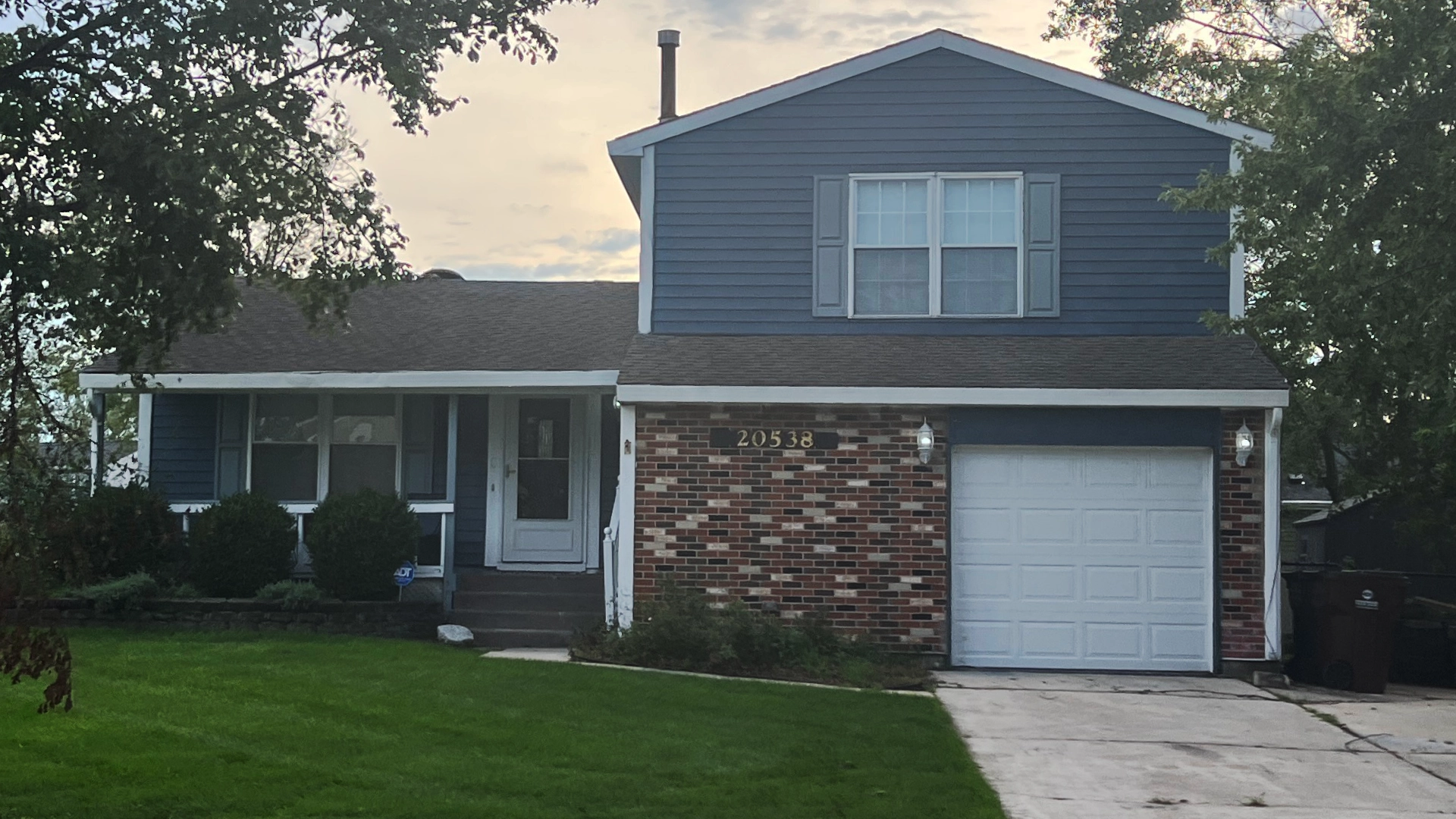
Tri-level homes are also common throughout the neighborhood. The main entrance usually opens into a living room, dining area, and kitchen arranged on the central level.
A short staircase leads to the bedroom level, which commonly contains three bedrooms and a full bathroom. Another short staircase leads down to a family room, laundry area, utility space, and frequently an additional bathroom.
Most tri-levels were constructed on slabs rather than over full basements. Some have walkout access or a door leading from the lower level into the yard. Storage, lower-level moisture, and the number of bathrooms can make a noticeable difference when comparing otherwise similar homes.
Ranch Homes

Frankfort Square contains a number of smaller ranch homes, although they are less dominant than the raised ranches and tri-levels.
These properties commonly have one-story living, compact floorplans, and either a one-car or two-car garage. Most do not have basements, although exceptions exist.
Ranch homes can appeal to buyers who want to avoid frequent stair use. Because the supply is limited, a well-maintained ranch with a practical floorplan and two-car garage can stand apart from the surrounding inventory.
Two-Story and One-and-a-Half-Story Homes

Traditional two-story homes are present but are less common than the neighborhood’s split-level designs. Some homes may also be described as one-and-a-half-story properties depending on the roofline and whether the upper floor extends across the entire structure.
These homes vary more widely in size and layout. Buyers may find conventional two-story floorplans, partial upper levels, second floors extending above the garage, and homes that have been expanded since their original construction.
What Frankfort Square Homes Are Like Inside
Buyers should expect substantial variation inside homes that appear nearly identical from the street. Over five decades, owners have enclosed rooms, opened kitchens, converted garages, finished lower levels, added bathrooms, replaced windows, and built additions.
Some improvements are well designed and professionally completed. Others reflect the decorating choices and construction methods of a very different era. Wood paneling, smaller kitchens, narrow closets, original interior doors, and older bathroom layouts are not unusual in homes that have not been fully renovated.
Important considerations include:
- Lower-level condition: Look for signs of past moisture, drainage issues, or repeated repairs.
- Usable living space: Determine whether finished lower-level rooms are comfortable, properly heated, and legally suitable for their intended use.
- Storage: Slab homes and properties without basements may have less storage than buyers expect.
- Garage size: One-car and two-car garages exist, and the difference can materially affect resale appeal.
- Bathroom count: Some original floorplans have fewer bathrooms than modern buyers prefer.
- Additions and conversions: Buyers should investigate permits, workmanship, heating, insulation, and electrical improvements.
- Mechanical updates: Roofs, furnaces, air-conditioning systems, water heaters, windows, and electrical panels may have been replaced at very different times.
In Frankfort Square, condition frequently matters more than the original model name. Two houses built from the same plan can offer very different ownership experiences.
Court Homes of Frankfort Square
Court Homes of Frankfort Square is one of the largest and most recognizable attached-housing communities in the area. It is often among the most affordable ownership options for buyers who want a private entrance and attached garage rather than a traditional apartment-style condominium.
The homes are legally condominiums but have the appearance and function of townhomes. Private entrances and attached garages are common, with many units having a single-car garage.
The community includes several different layouts. Buyers may encounter ranch-style units, two-story homes, and a smaller number of less common multi-level configurations. Some units have basements, while others do not.
The buildings are older and relatively close together, but the community provides an attainable path to ownership in the Frankfort Square area. Condition varies considerably. Some units remain largely original, while others have updated kitchens, baths, flooring, mechanical systems, and finished basements.
Buyers considering Court Homes should review:
- Monthly association assessments
- Recent association budgets and financial statements
- Rules concerning rentals, pets, parking, and exterior changes
- Insurance responsibilities
- Planned maintenance and special assessments
- Which exterior components are maintained by the association
- Basement condition and any history of water intrusion
Court Homes should not be confused with the smaller clusters of townhomes and apartment-style condominiums located elsewhere around St. Francis Road. Those properties may have different associations, layouts, restrictions, and maintenance responsibilities.
Lots, Streets, and Neighborhood Character
Frankfort Square feels established. Trees have had decades to mature, landscaping varies from one property to the next, and the homes no longer have the uniform appearance of a newly constructed subdivision.
Some streets are relatively open, while others have heavier tree coverage and a more enclosed neighborhood feel. Wooded or partially wooded lots can be found, although lot size and privacy vary considerably.
Many of the detached single-family sections do not have homeowners associations. That gives owners more flexibility, but it also means property upkeep and exterior appearance can differ more widely from block to block.
Attached homes and condominiums are different. Those communities have associations, assessments, maintenance responsibilities, and restrictions that should be reviewed before purchasing.
The atmosphere is generally informal and lived-in. People use the walking paths, take dogs around the ponds, work in their yards, and spend time at the neighborhood parks. It does not feel polished to the point of being artificial, which is part of its appeal.
Frankfort Square Parks and Recreation
The Frankfort Square Park District is a major part of the neighborhood. Its facilities are distributed throughout the community rather than concentrated in one central recreational complex.
Community Park

Community Park is one of the most visually appealing and frequently used neighborhood spaces. The pond and surrounding walking path draw walkers, runners, dog owners, and residents who simply want to get outside without driving to a larger regional preserve.
The park includes a fishing pier, playground, picnic shelter, pickleball courts, permanent lawn games, bocce facilities, interpretive signage, and community gardens. The garden area includes traditional plots and elevated garden beds used for flowers, vegetables, and seasonal planting.
Community Park feels less like a large athletic complex and more like a neighborhood gathering place. The pond, landscaping, paths, gardens, and recreational areas make it useful even for residents who are not participating in an organized program.
Union Creek Community Park
Union Creek Community Park is the larger recreational center serving the area. It includes walking paths, ponds, athletic fields, playgrounds, a dog park, skate park, sledding hill, picnic shelters, an inline hockey rink, and other active recreational facilities.
This is the park residents are more likely to use for organized sports, larger gatherings, dog-park visits, skating, sledding, or activities requiring more open space.
Square Links Golf Course and Practice Center
Square Links Golf Course and Practice Center sits along St. Francis Road and serves as both a neighborhood amenity and a recognizable geographic landmark. The park-district-owned facility includes a nine-hole golf course, driving range, practice areas, and putting facilities.
The course is smaller and more approachable than a full-length private golf club, making it useful for casual golfers, younger players, and residents who want a convenient practice facility close to home.
In addition to these larger facilities, Frankfort Square includes smaller neighborhood parks, school parks, playgrounds, paths, and recreational spaces spread throughout the community.
Schools Serving Frankfort Square
Most Frankfort Square properties are served by Summit Hill School District 161 for elementary and junior-high education and Lincoln-Way Community High School District 210 for high school.
Summit Hill District 161 has deep ties to the development of Frankfort Square. Frankfort Square School was originally constructed to serve the subdivision as residential growth accelerated during the 1970s.
The exact elementary-school assignment can vary by address. Buyers should never rely solely on a real estate listing, mailing address, or the school attended by children living a few blocks away. District boundary maps and direct confirmation from the school district provide the most reliable answer.
For a more complete breakdown of the districts, school progression, boundary considerations, and educational options, visit the Frankfort Schools and Education Guide.
Shopping, Commuting, and Everyday Convenience
Frankfort Square sits between the commercial areas of Frankfort and Tinley Park. That gives residents access to two different communities for shopping, restaurants, medical offices, professional services, and everyday errands.
Route 30 provides access to nearby retail and services, while Harlem Avenue connects the neighborhood with Tinley Park, Orland Park, and communities farther north. Interstate 80 is also accessible without requiring residents to travel through downtown Frankfort.
One tradeoff is that Frankfort Square does not have a traditional downtown district of its own. Residents generally drive to downtown Frankfort, Tinley Park, or larger commercial corridors for dining and entertainment.
The upside is that the residential portions remain separated from much of the congestion associated with those commercial areas. Most streets feel residential even though major roads are nearby.
Advantages of Living in Frankfort Square
- Generally more affordable home prices than much of incorporated Frankfort
- Access to established school districts
- A wide selection of raised ranches, tri-levels, ranches, and attached homes
- Municipal water and sewer service
- Mature trees and established residential streets
- No homeowners association in many detached single-family sections
- Community Park, Union Creek Community Park, Square Links, and smaller neighborhood parks
- Convenient access to Frankfort, Tinley Park, Route 30, Harlem Avenue, and Interstate 80
- Potential to add value by improving an older home
Tradeoffs Buyers Should Understand
- The housing stock is older and condition varies considerably.
- Many homes have smaller kitchens, bedrooms, closets, and bathrooms than newer construction.
- Raised ranches and tri-levels require regular stair use.
- Full basements are not standard across the neighborhood.
- Slab homes may offer less storage.
- One-car garages are common in certain sections and attached communities.
- Some remodeling, additions, and room conversions may require closer inspection.
- The community is unincorporated and does not receive every service through the Village of Frankfort.
- Water softeners are common.
- Neighborhood boundaries can be confusing near Frankfort Highlands and the Will County portion of Tinley Park.
- Attached communities have association assessments and restrictions.
Buying a Home in Frankfort Square
Buying in Frankfort Square requires more than finding a floorplan you like. Similar-looking homes can differ dramatically in maintenance, improvements, usable living space, and long-term ownership costs.
Buyers should pay particular attention to:
- The age and condition of the roof, windows, furnace, air conditioner, and water heater
- Drainage and moisture history in lower levels
- The quality and legality of finished rooms, additions, and garage conversions
- Bathroom count and the practicality of the floorplan
- Storage space in homes without basements
- Garage size and driveway parking
- School assignments based on the exact property address
- Association finances and rules when purchasing an attached home
- Property taxes rather than relying only on the advertised purchase price
An original-condition home is not automatically a poor purchase, and a remodeled home is not automatically a good one. The quality of the work, the underlying mechanical condition, and the price relative to the market all matter.
Selling a Home in Frankfort Square
Sellers in Frankfort Square compete against homes with similar original architecture. Presentation, condition, and pricing are what create separation.
Updated kitchens, bathrooms, flooring, paint, lighting, and lower-level living spaces can attract attention, but sellers do not necessarily need to renovate the entire home before listing. The better strategy depends on the property’s current condition, likely buyer pool, and the cost of the improvements.
Raised ranches should be presented so buyers understand how the lower level functions. A dark or poorly arranged lower level can make the home feel smaller, while a clean and properly staged family room, office, or additional living area can materially improve the showing experience.
Pricing should account for more than total square footage. Garage size, bathroom count, basement or slab construction, lot position, interior updates, mechanical condition, and the quality of the lower level all affect value.
Sellers should also avoid comparing their property directly with a much larger home in incorporated Frankfort simply because both share a Frankfort mailing address. Frankfort Square operates as its own micro-market.
What I like about Frankfort Square is that it gives people several different ways to buy into the area. You can start with a condo-style Court Home, find a manageable ranch, or buy a raised ranch with enough lower-level space to grow into. The houses may look similar from the street, but once you have been through enough of them, you realize how different each property can be.
Frankfort Square Frequently Asked Questions
Is Frankfort Square part of the Village of Frankfort?
No. Frankfort Square is an unincorporated Will County community. It has a Frankfort mailing address but is not governed by the incorporated Village of Frankfort.
Who provides police service in Frankfort Square?
Law enforcement service is provided by the Will County Sheriff’s Office rather than the Frankfort Police Department.
Does Frankfort Square have municipal water and sewer?
Yes. The Village of Frankfort water and sewer utility serves Frankfort Square even though the community is unincorporated.
What schools serve Frankfort Square?
Most properties are associated with Summit Hill School District 161 and Lincoln-Way Community High School District 210. Exact school assignments should be verified using the property address.
What types of homes are common?
Raised ranches, bi-levels, tri-levels, compact ranches, and smaller two-story homes are common. Most of the neighborhood was developed during the 1970s and 1980s.
Do Frankfort Square homes have basements?
Some do, but full basements are not standard. Many tri-level and ranch homes were built on slabs. Some raised ranches have finished lower levels that are partly below grade but are not traditional basements.
Does Frankfort Square have homeowners associations?
Many detached single-family sections do not have homeowners associations. Condominiums and attached communities, including Court Homes of Frankfort Square, have associations and monthly assessments.
Is Frankfort Square less expensive than Frankfort?
Frankfort Square generally offers lower entry prices than many incorporated Frankfort subdivisions. Final value still depends on the home style, condition, updates, garage, lot, and current inventory.
What is the difference between Frankfort Square and Frankfort Highlands?
The two areas adjoin one another and their boundaries can feel unclear. Frankfort Highlands generally contains somewhat larger or more varied homes and lots, while Frankfort Square has a heavier concentration of 1970s- and 1980s-era raised ranches, tri-levels, ranches, and attached homes.
Thinking About Buying or Selling in Frankfort Square?
Frankfort Square looks straightforward until you begin comparing individual properties. Home style, lower-level configuration, condition, garage size, association structure, and municipal boundaries can all affect the decision.
I have worked with buyers and sellers throughout Frankfort Square and the surrounding Frankfort, Tinley Park, and Lincoln-Way area. If you are considering a move, I can help you compare the options, understand the local market, and determine which properties make sense for your situation.
Call (815) 301-7007 or email ray@raysguide.com.