

Disclosure: Some links on this page are affiliate links. If you choose to make a purchase through them, I may earn a small commission at no extra cost to you. As an Amazon Associate, I earn from qualifying purchases.
The House They Love is Becoming a Trap
Let’s be brutally honest for a second. The house your parents have lived in for 30 years, the one where you grew up, wasn't built for the bodies they have today. They desperately want to stay there because it’s their home, their independence, and their pride. But when you look around, you start noticing the dangers.
You see the steep stairs, the slippery bathtub, and that one throw rug in the hallway that always bunches up. After more than 20 years as a real estate broker, walking through thousands of properties, I can tell you firsthand: hoping for the best is a terrible strategy. A single bad fall doesn't just mean a trip to the hospital; it usually forces a permanent move into a nursing home that drains the family's life savings at $10,000 a month.
You don't have to force them to move, but you do have to fix the house.
You can't be there 24/7, but you can bulletproof their environment. Here is exactly what you need to look for and fix right now to keep them safe and help you sleep a little better at night.
Phase 1: The Bathroom (Where Most Accidents Happen)
If you only have the time or money to fix one room, do the bathroom. Hard tile, standing water, and bad balance are a recipe for disaster. This is the danger zone.
-
Throw Away the Suction Cup Grab Bars
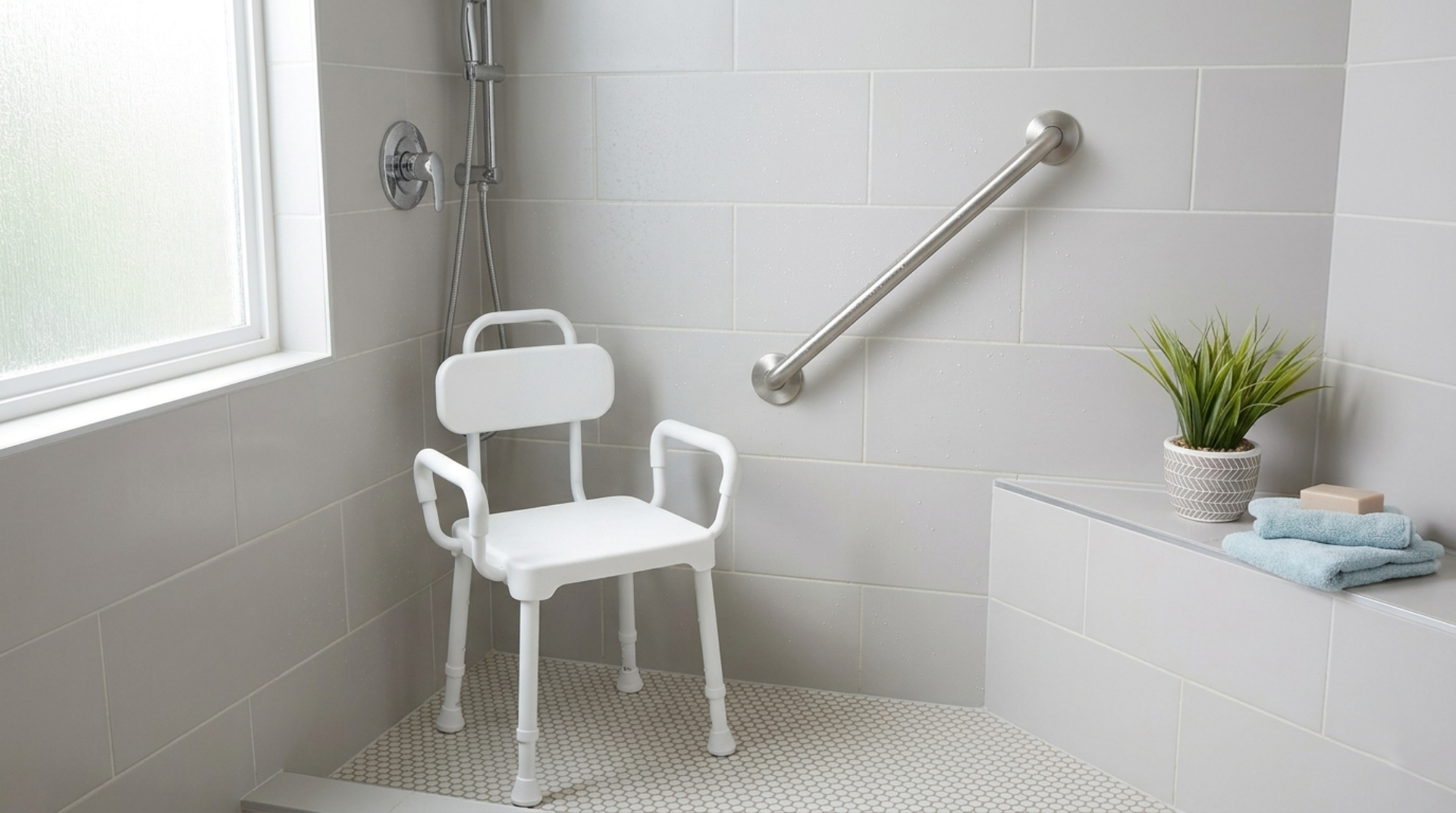
Do not buy those cheap suction-cup handles from the pharmacy. They are designed to help you balance, not hold your body weight. If your mom slips and grabs it, it will rip right off the wall. Hire a handyman to install real, stainless steel grab bars anchored directly into the wooden wall studs. Put one at the shower entrance and one inside.
-
The Bathtub Barrier
Think about how hard it is to balance on one wet foot while lifting the other leg 15 inches over a bathtub wall. If you can afford it, tear out the old tub and put in a walk-in shower. If a remodel isn't in the budget, buy a heavy-duty transfer bench so they can sit down outside the tub and safely slide across into the shower.
-
Upgrade the Toilet and Faucets
Sitting down and standing back up from a low toilet is exhausting on bad knees. Swap the old one out for a "comfort height" toilet that sits a few inches higher. While the plumber is there, get rid of the twist-knob sink faucets. Arthritis makes twisting those knobs painful. Swap them for single-lever handles that they can easily push with the side of their hand.
Helpful Bathroom Safety Resources
If you are trying to make the bathroom safer and easier to use, these are the kinds of items worth looking at:
- Shower or tub grab bar – adds stability when stepping in, out, or moving around the shower.
- Non-slip bath mat – helps reduce slipping on wet tile or smooth surfaces.
- Shower chair or bench – useful if standing for longer periods is becoming harder or less comfortable.
Phase 2: Clearing the Obstacle Course
You have to look at the house differently now. You aren't just walking through it; you have to imagine shuffling through it, or trying to push a walker.
-
The War on Throw Rugs
Throw rugs are traps. Period. They slip on hardwood, the edges curl up, and walkers get snagged on them. You need to roll them up and get them out of the house. If your parents absolutely refuse to part with a specific living room rug, use heavy-duty, double-sided carpet tape to lock down every single edge so it physically cannot move.
-
Making Room for Walkers
If your parent ever needs a walker, they need about 36 inches of wide-open space to move around. It's time to do some heavy lifting. Clear out the bulky decorative tables in the hallway and the oversized chairs blocking the path to the kitchen. If a doorway is too tight, you can buy "swing-clear" hinges for about 30 bucks at the hardware store. They swing the door completely out of the way, giving you extra inches without tearing down a wall.
Helpful Safety Resources
If you are trying to make walking paths and living areas easier and safer, these are the kinds of items worth looking at:
- Heavy Duty Carpet Tape Double Sided Rug Tape – prevent trip hazards and reduce falls by securing edge of throw or area rugs. Inexpensive alternative if you do not wish to remove the rugs.
- Rollator Walker with Seat and Backrest for Seniors – This four-wheeled rollator glides smoothly, so your parent doesn't have to lift a heavy frame with every step. The best part is the built-in seat and backrest, giving them a safe place to sit and catch their breath whenever they need it.
Phase 3: Lighting and Hidden Air Hazards
As we get older, our eyes need way more light to see depth and shadows. A dark staircase isn't just spooky; it's a major fall hazard.
-
Brighten Everything Up
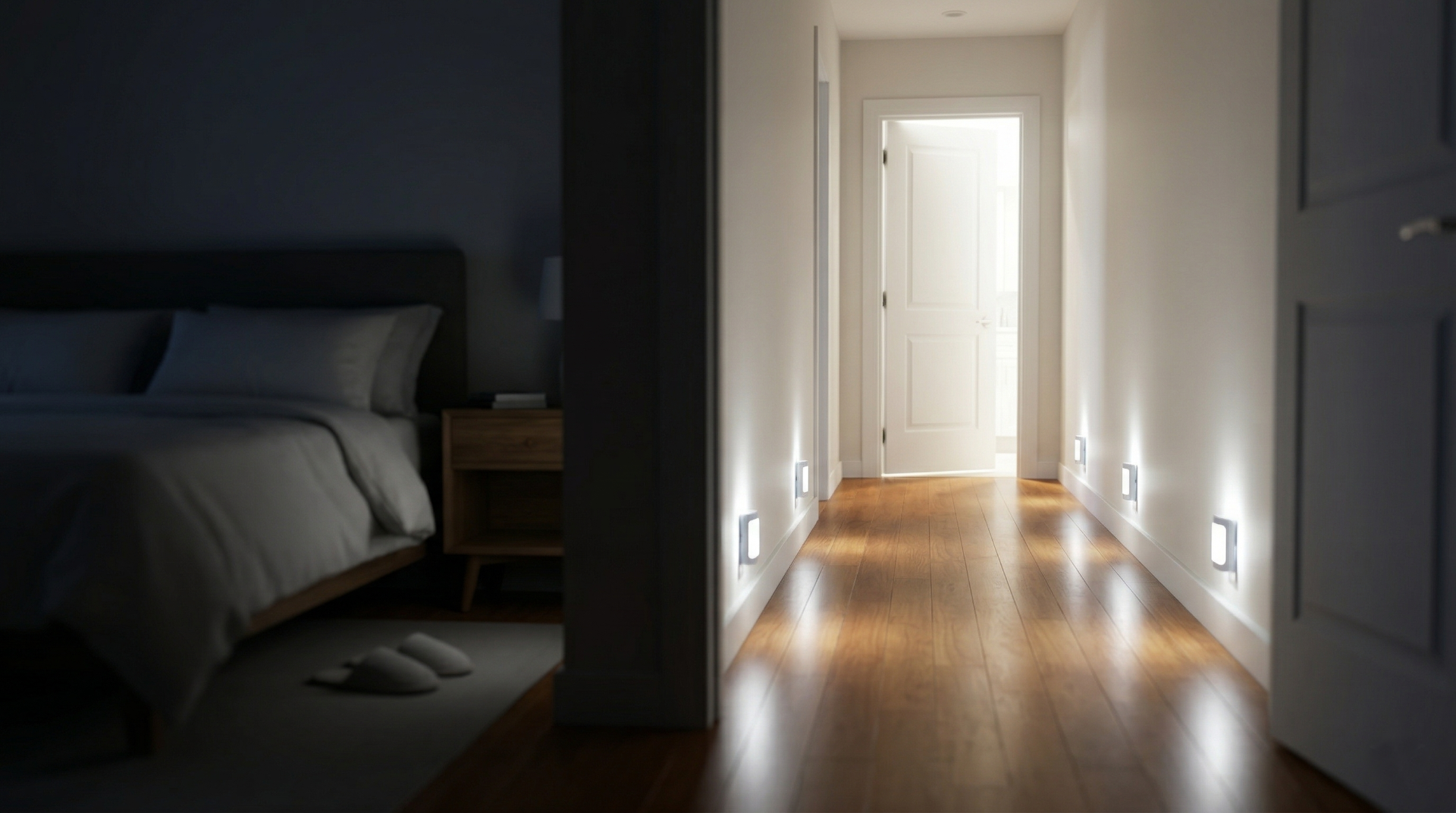
Go through the house and swap out the dim bulbs for bright, white LED lights. Focus heavily on the path from the bed to the bathroom. Plug in a few motion-sensor nightlights along the baseboards. When their feet hit the floor at 2:00 AM, the hallway should light up automatically.
- Motion-sensor night lights – useful for hallways, bathrooms, bedrooms, and stairs.
- Brighter LED bulbs – a simple upgrade that can improve visibility in key areas of the house.
- Stair or pathway lighting – helps reduce missteps in darker transition areas.
-
Check the Air and the Heat
Don't just look at the floors; look at the environment. Swap the old thermostat for a smart one, so you can check the temperature from your phone and make sure the heat hasn't died in January. And don't forget the basement. I recently coordinated a massive garage cleanout and radon mitigation project for a property over in Mokena, these older houses sit with dangerous, invisible gases in the basement for decades. Get a simple radon test done so you know they are breathing safe air.
Helpful Lighting and Visibility Resources
If nighttime visibility or poorly lit spaces are becoming more of an issue, these are a few practical things worth looking at:
Helpful Monitoring and Maintenance Resources
If you want earlier warning signs instead of bigger surprises later, these are a few practical tools to consider:
- Smart Thermostat – helps monitor comfort and system performance more easily.
Phase 4: The Safety Net (For When You Can't Be There)
You can remodel the bathroom, tape down the rugs, and light up the hallways. But all of those physical fixes have one massive flaw: They don't call you if something goes wrong.
What happens if your dad falls in that newly remodeled bathroom at midnight? Most families panic and buy a wearable emergency button. But the truth is, seniors hate wearing them. They take them off to shower, they forget to put them back on, or they are too hurt to push the button when they actually fall. A button sitting on the nightstand is completely useless during an emergency.
Why the Daily "I'm Fine" Phone Call Isn't Enough
If you're relying on a 10-minute phone call to check on your parents, you're missing the full picture. Seniors often hide their struggles because they don't want to be a burden. A phone call won't tell you if they are up pacing the house all night, skipping meals, or dealing with sudden confusion from a hidden illness.
Stop Guessing, Start Knowing with Envoy at Home
Disclosure: The link below is an affiliate link, which means I may earn a commission if you choose to make a purchase, at no extra cost to you.
To truly keep them safe, you need a system that watches over them without invading their privacy with creepy indoor cameras. The modern solution is passive monitoring.
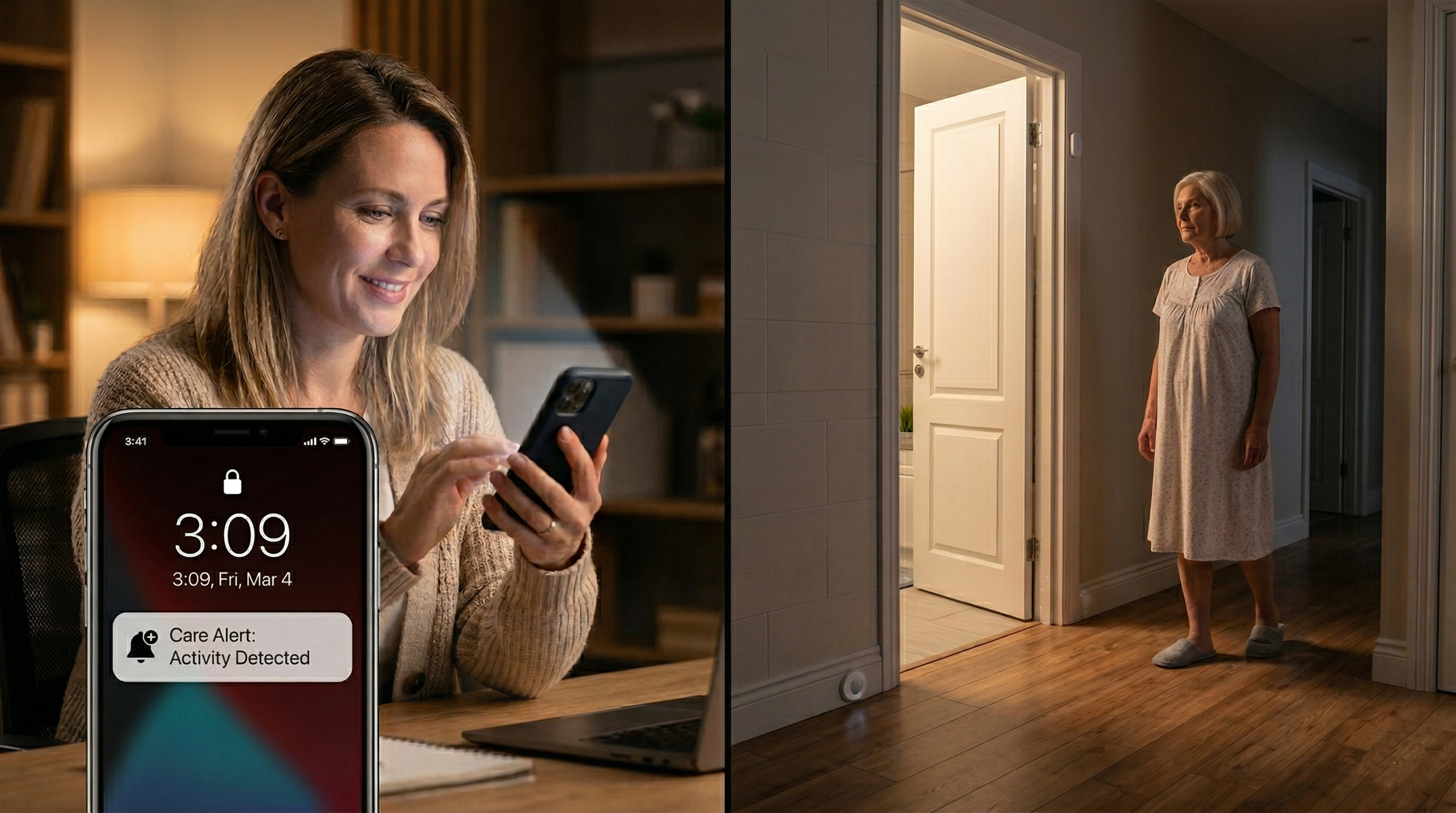
I highly recommend Envoy at Home. It uses simple, invisible motion sensors to learn their daily routine. It automatically sends an alert to your phone if they haven't gotten out of bed, if they are wandering the house at 3 AM, or if they've been in the bathroom for an unusually long time. It does the watching for you, for pennies an hour.
Learn more about how Envoy at Home works and secure their independence today. →
- Focus on the bathroom first: install real grab bars and get rid of the step-over bathtub.
- Remove the tripping hazards: ditch the throw rugs and clear wide pathways for walkers.
- Light it up: use bright bulbs and motion-sensor lights so they can actually see where they are walking at night.
- Physical upgrades aren't enough: use passive monitoring tech to alert you if something goes wrong when they are home alone.
Disclaimer: The information provided in this guide is for educational and informational purposes only and does not constitute medical, financial, or legal advice. I am a licensed real estate broker in Illinois, not a doctor or a general contractor. Always consult with a certified aging-in-place specialist or medical professional regarding your specific family situation before making major changes to a home.