
The Exhaustion of Not Knowing
If you don't live in the same house as your aging parent, you probably know the feeling. It’s that sudden, cold drop in your stomach when you call them at 9:00 AM and they don't answer. Your brain immediately goes to the worst-case scenario. Are they in the shower? Did they leave their phone in the other room? Or are they on the floor?
Being a long-distance caregiver, even if "long distance" is just 30 minutes across town, is an exhausting second job. You are managing a massive blind spot. You want them to keep their independence, but the price of that independence is your constant, low-level anxiety.
You spend your days waiting for a phone call you never want to get.
To try and fix this, families usually rely on three things. And unfortunately, all three of them are fundamentally flawed.
The Three Flawed Safety Nets
-
1. The "I'm Fine" Phone Call
You call them every day. They tell you they are doing great. But parents lie to protect us. They don't want to be a burden, so they won't tell you they've been pacing the house all night because of anxiety, or that they are running to the bathroom six times a night (a huge warning sign for a UTI). A ten-minute phone call only tells you what they want you to hear. It doesn't tell you how they are actually living.
-
2. The Wearable Panic Button
This is the classic go-to. You buy them a button to wear around their neck or wrist. But here is the harsh reality of those buttons: seniors hate them. They make them feel old. So, they take them off to take a shower, or they leave them on the nightstand when they go to sleep. When a fall actually happens at 2:00 AM, the button is sitting on a table on the other side of the room, completely useless.
-
3. The Camera Argument
Out of sheer desperation, you suggest putting a few Wi-Fi cameras in the hallway or the kitchen. It immediately starts a fight. And honestly, they are right to be upset. It feels like spying. They want their dignity, and living under a camera lens in their own home feels like giving up their freedom. It’s a battle you won't win, and shouldn't have to.
The Shift: Reading the House, Not the Person
The problem with everything listed above is that it relies on your parent to do something (answer the phone, push a button, accept a camera). But what if the house itself could just quietly tell you they are okay?
When you take a step back, safety isn't about watching them; it's about watching their routine.
If your mom always makes coffee by 8:00 AM, and there hasn't been a single footstep in the kitchen by 10:00 AM, something is wrong. If your dad usually sleeps through the night, but suddenly the front door opens at 3:00 AM, you need to know immediately. You don't need a video of it. You just need an alert on your phone that the routine is broken.
This is called passive monitoring, and it is completely changing how families take care of their parents. It bridges the gap between hiring a wildly expensive 24/7 home health aide and just crossing your fingers and hoping for the best.
The Solution: Camera-Free, 24/7 Peace of Mind
You don't need to spy on your parents to keep them safe, and you don't need to rely on a plastic button they forget to wear. You just need a system that quietly pays attention.
This is why I recommend a completely camera-free monitoring system. Instead of video, it uses tiny, peel-and-stick motion sensors placed on baseboards, doors, and cabinets. It learns what a "normal" day looks like for your parent. If something abnormal happens, like they are in the bathroom for an unusually long time, or they haven't gotten out of bed, it instantly texts your phone.
Disclaimer: The link below is an affiliate link. This means I may earn a small commission if you sign up, at no extra cost to you. I only recommend solutions that actually work for families in the real world.
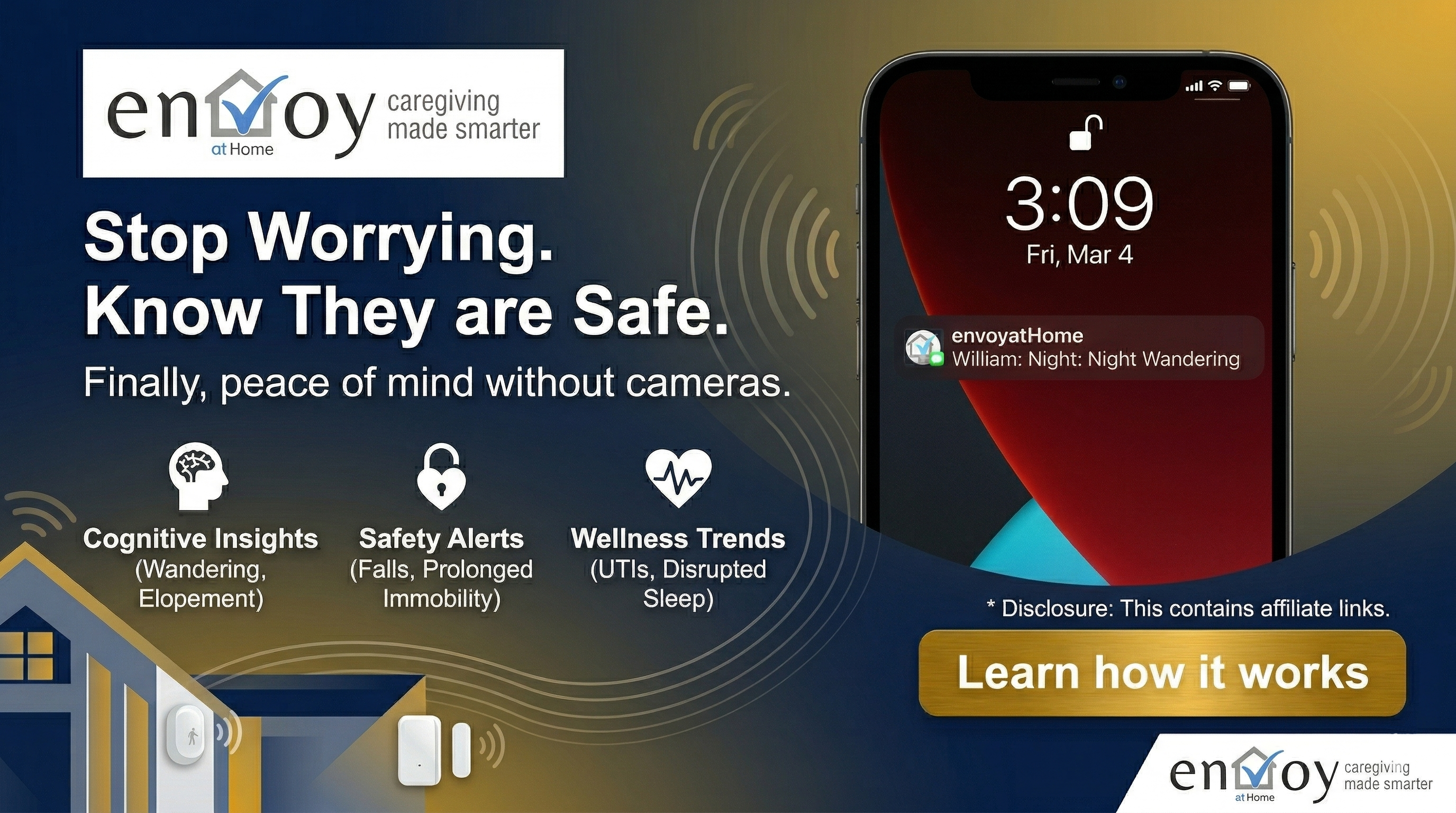
Envoy at Home
Envoy at Home is the smartest way to check on your parents without actually "checking up" on them. There are no cameras, no microphones, and nothing they have to remember to wear. It just tracks their movement and translates it into a simple feed on your phone.
- Automatic Fall Discovery: Finds falls by spotting unusual immobility, even if they can't call for help.
- Nighttime Wandering Alerts: Instantly know if a door opens when they should be sleeping.
- Health Trend Tracking: Spots changes in bathroom habits or sleep so you can catch illnesses before they become emergencies.