
Disclosure: Some links on this page are affiliate links. If you choose to make a purchase through them, I may earn a small commission at no extra cost to you. As an Amazon Associate, I earn from qualifying purchases.
Staying in your home can absolutely be the right decision. For a lot of people, it makes more sense than forcing a move, taking on new debt, or jumping into a housing market they do not like. But staying works best when it is treated like a strategy, not a default setting.
A lot of homeowners tell themselves they are staying because they love the house. Sometimes that is true. Sometimes they are staying because moving feels exhausting, expensive, emotional, or overwhelming. There is nothing wrong with that. But the longer you plan to stay, the more important it becomes to ask a simple question: what has to be true for this house to keep working for me?
If the answer is starting to become "not much longer," read: "If Moving and Downsizing Makes More Sense: What To Do First" before the decision gets made under pressure.If you are going to stay long-term, the goal is not just to remain in the house. The goal is to make sure the house still supports your life, your budget, your routines, and your body without creating constant friction.
1. Start With Financial Reality, Not Sentiment
A paid-off home is still not a free home. Even without a mortgage, the house keeps sending bills. Property taxes, insurance, utilities, landscaping, snow removal, repairs, maintenance, and the occasional expensive surprise do not care whether you are retired, slowing down, or trying to simplify your life.
If you plan to stay, the first strategy is to get brutally clear on what the house really costs you each year. Not what you think it costs. Not what it used to cost. What it costs now.
- Property taxes
- Insurance
- Utilities
- Routine maintenance
- Outside help for tasks you no longer want to do yourself
- Expected repairs over the next 3 to 5 years
That number matters because staying only works when the home still leaves enough margin in your life. If the house eats up too much money every year, it becomes harder to absorb repairs, harder to travel, harder to help family, and harder to deal with health or life changes.
One of the biggest mistakes I see is people thinking, "The mortgage is gone, so I'm fine." That may have been true years ago. Today, the better question is whether the house still fits your income and your tolerance for ongoing costs.

2. Reduce Physical Friction Before It Becomes a Bigger Problem
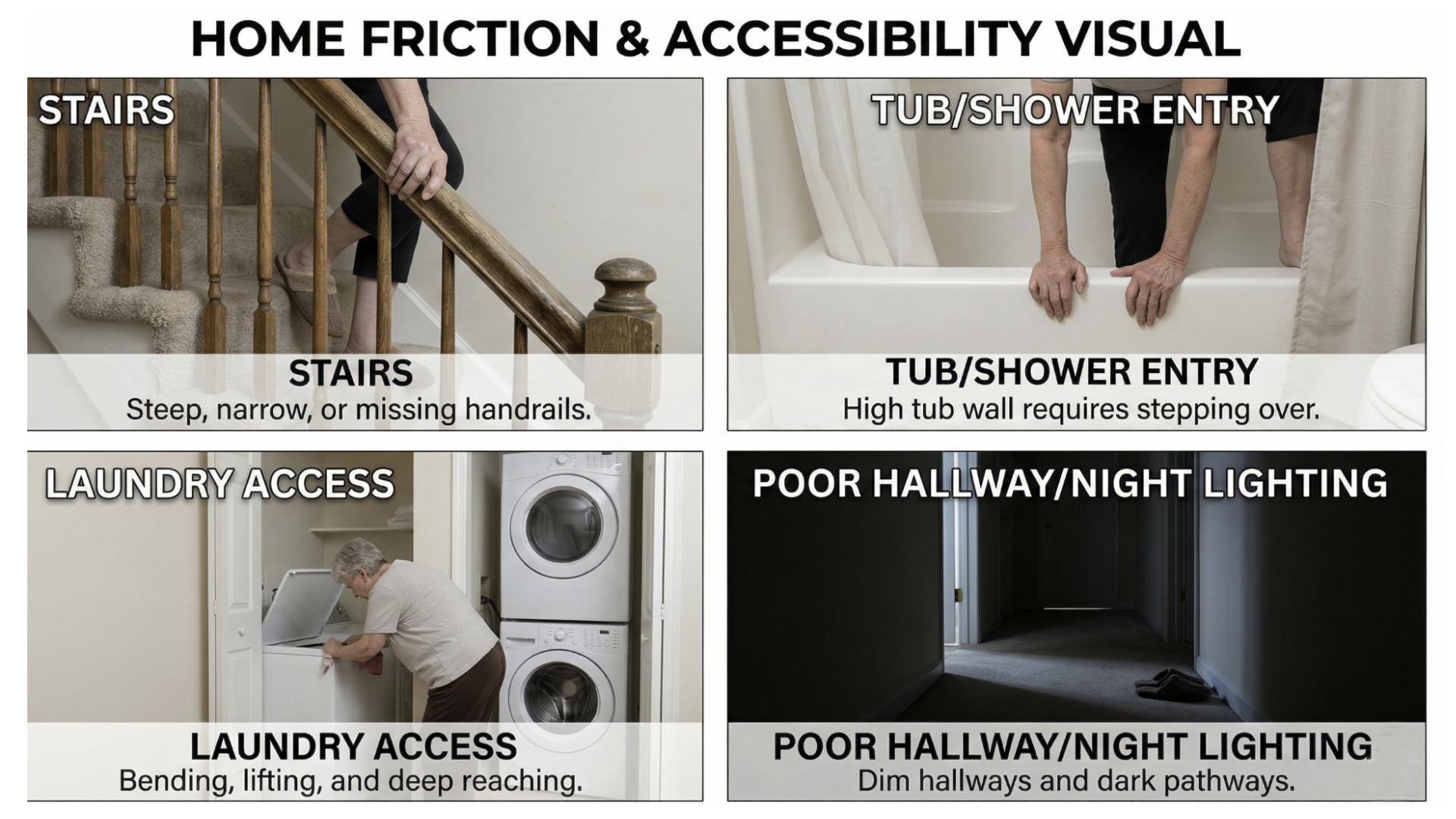
Most people do not get pushed out of a house by one dramatic event. Usually it starts with small friction points that slowly pile up.
The stairs get a little more annoying. The tub starts feeling less stable. The laundry setup becomes a pain. Reaching high shelves becomes more awkward. Carrying things in from the garage becomes less convenient. The lighting in a hallway feels fine during the day and lousy at night. None of that sounds major on its own. Together, it changes how the house feels.
Helpful Lighting and Visibility Resources
If nighttime visibility or poorly lit spaces are becoming more of an issue, these are a few practical things worth looking at:
- Motion-sensor night lights – useful for hallways, bathrooms, bedrooms, and stairs.
- Brighter LED bulbs – a simple upgrade that can improve visibility in key areas of the house.
- Stair or pathway lighting – helps reduce missteps in darker transition areas.
If you are planning to stay, one of the smartest things you can do is walk through the house and identify the areas where daily life is becoming harder than it needs to be.
Focus first on the areas that affect you every day:
- Bathroom safety
- Entryways and steps
- Stairways
- Laundry access
- Kitchen storage
- Nighttime lighting
The goal is not to turn the house into a hospital room. It is to remove unnecessary risk and reduce daily effort. A well-placed handrail, better lighting, or a safer shower setup can do more for long-term staying power than another cosmetic update ever will.
Helpful Bathroom Safety Resources
If you are trying to make the bathroom safer and easier to use, these are the kinds of items worth looking at:
- Shower or tub grab bar – adds stability when stepping in, out, or moving around the shower.
- Non-slip bath mat – helps reduce slipping on wet tile or smooth surfaces.
- Shower chair or bench – useful if standing for longer periods is becoming harder or less comfortable.
3. Simplify the House You Are Actually Living In
A lot of people say they want to stay in their home, but what they really mean is they want to stay in the idea of their home.
That is different.
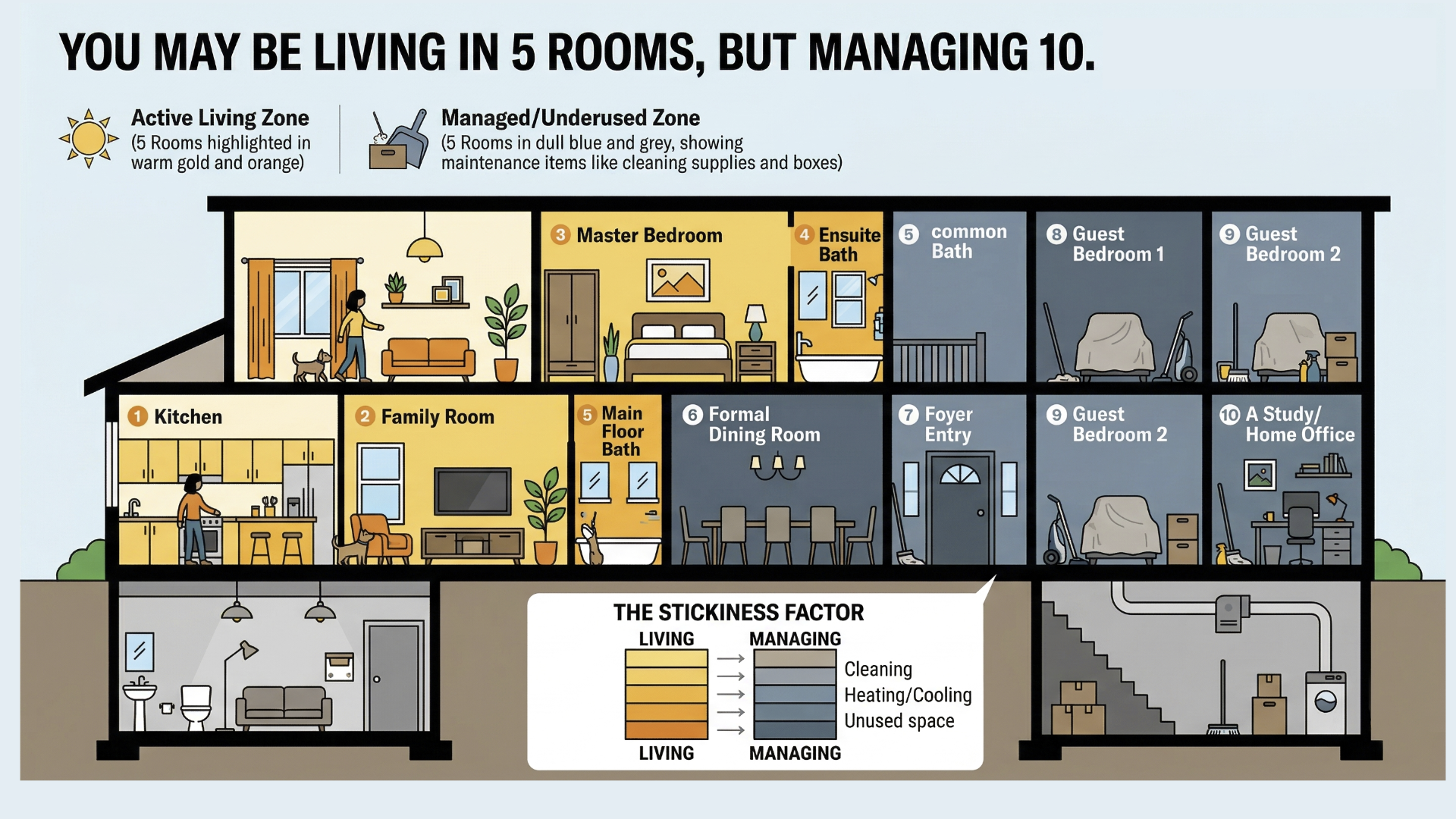
Maybe the house made perfect sense when kids were home, relatives visited often, and every room had a clear purpose. But if your day-to-day life is now happening in five rooms and the rest of the house is just extra furniture, old storage, or guest space used twice a year, then part of your staying strategy has to be simplification.
Staying long-term gets easier when the house becomes easier to manage.
That can mean:
- Clearing out underused rooms
- Removing furniture that makes walking paths tighter
- Reducing the amount of stuff stored in basements, spare rooms, and garages
- Setting up simpler storage systems that are easier to maintain
- Letting go of "someday" items that are taking up physical and mental space
You do not have to move to downsize your daily burden. A lot of people need less house management long before they need a different address.
Helpful Storage and Simplifying Resources
If the goal is to make the house easier to manage, these are the kinds of tools that can help reduce clutter and daily friction:
- Storage bins with lids – useful for simplifying closets, basements, and spare rooms.
- Drawer or shelf organizers – helps keep everyday items easier to find and manage.
- Rolling storage cart – makes it easier to keep commonly used items accessible without extra lifting or carrying.
4. Prioritize Repairs That Protect Staying Power
If you are staying, then your repair strategy matters.
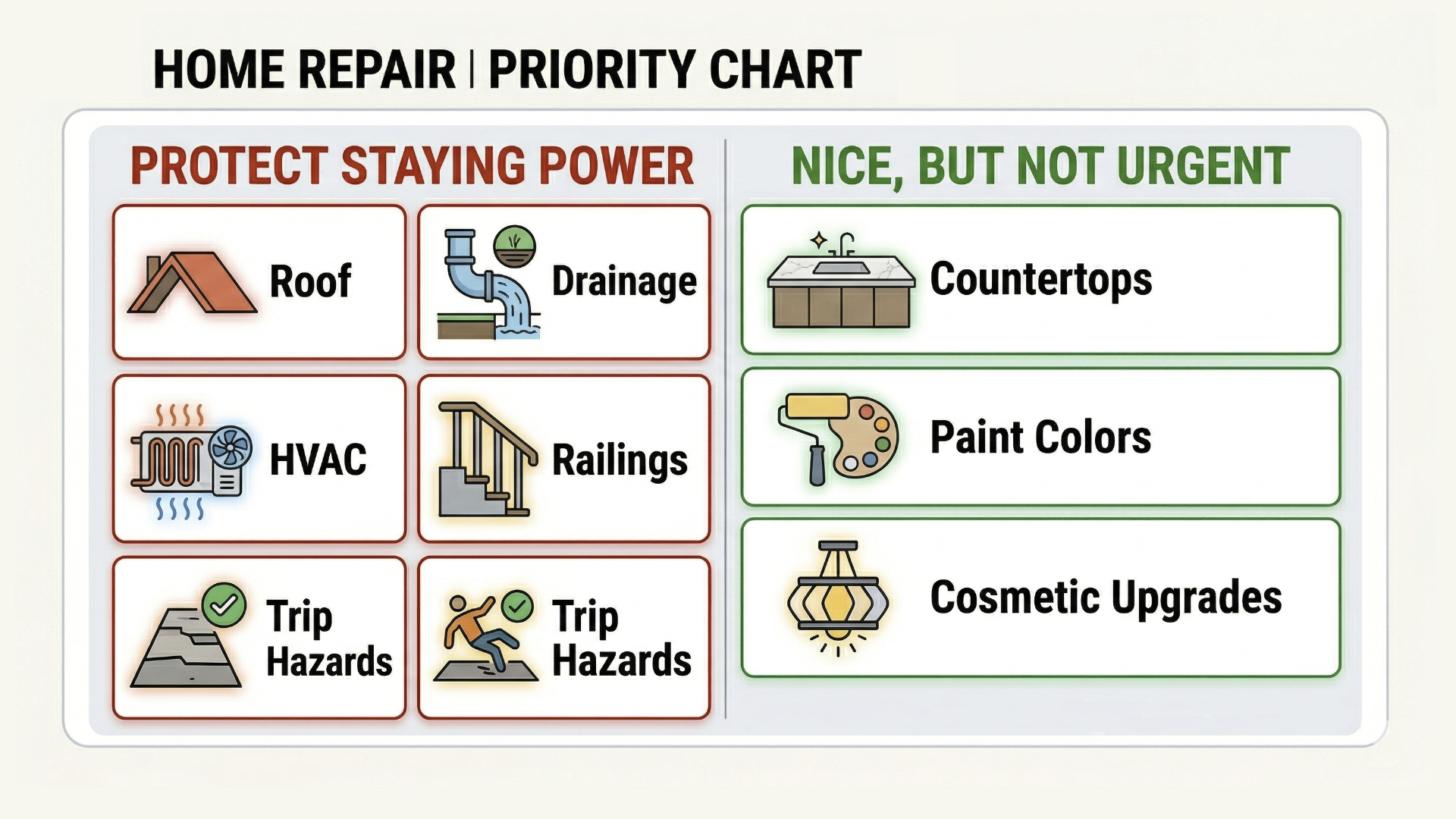
Not every repair deserves the same urgency. Some things are cosmetic. Some things directly affect whether the house remains safe, functional, and financially manageable.
If you are trying to stay long-term, the repairs that usually matter most are:
- Roof issues
- Water intrusion
- HVAC reliability
- Electrical concerns
- Plumbing failures
- Trip hazards
- Unsafe decking, railings, or exterior steps
The mistake many homeowners make is spending money where it feels emotionally satisfying instead of where it actually protects the plan. New counters are more fun than fixing drainage. Fresh paint is more fun than replacing a failing handrail. But if you are staying, the boring stuff is often the stuff that keeps the plan alive.
The right mindset is simple: fix what protects function, safety, and cost stability first. Save the nice-to-have projects for later.
Helpful Monitoring and Maintenance Resources
If you want earlier warning signs instead of bigger surprises later, these are a few practical tools to consider:
- Water leak detector – useful near water heaters, sinks, laundry areas, or basements.
- Water alarm sensor – can help catch moisture issues before damage spreads.
- Smart thermostat – helps monitor comfort and system performance more easily.
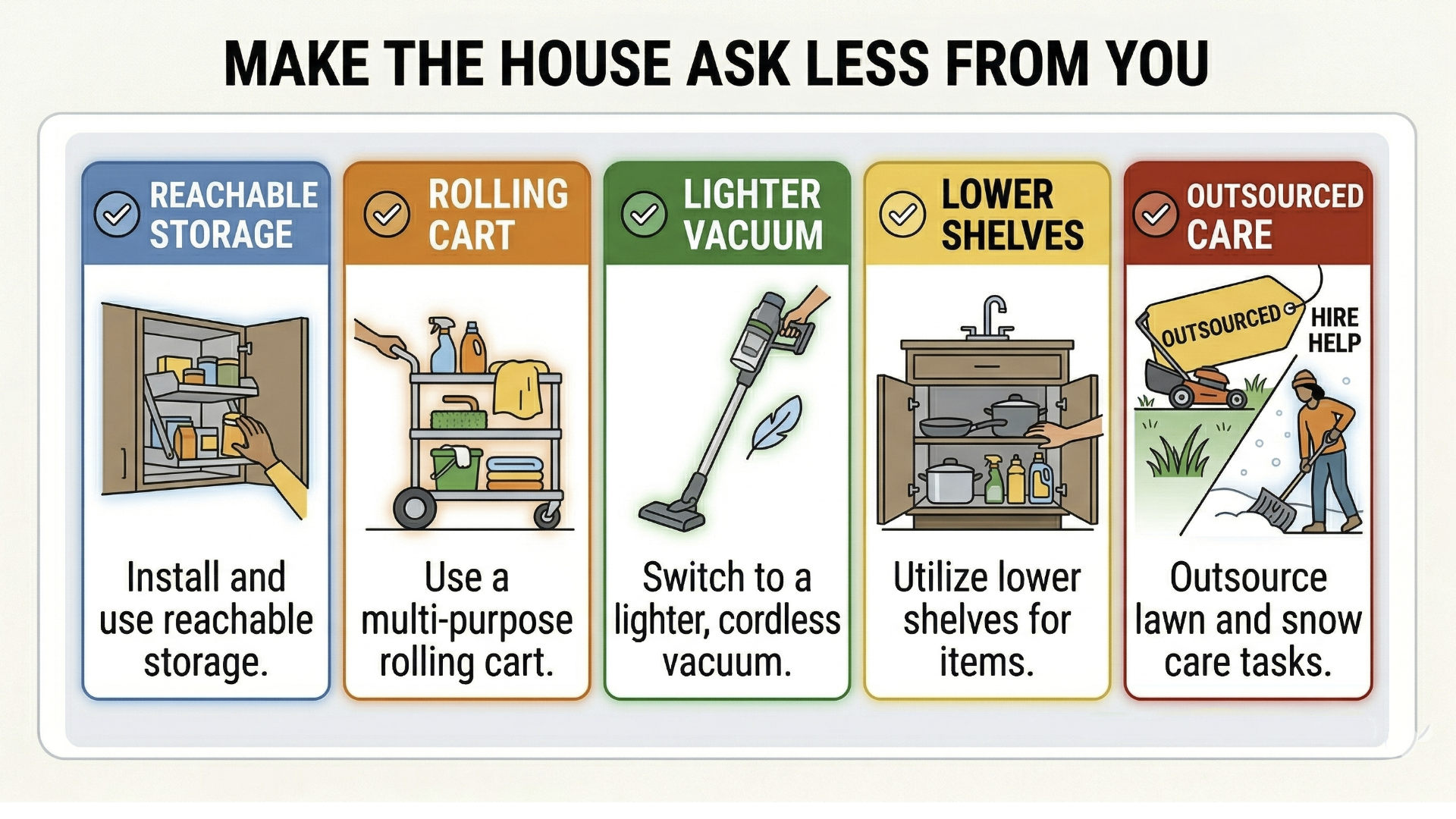
5. Make the House Easier To Maintain With Less Labor
One of the quietest reasons staying stops working is not always money. Sometimes it is labor.
The house may still be affordable on paper, but it takes too much effort to keep it running. Yard work, gutter cleaning, carrying laundry, swapping seasonal items, hauling boxes, reaching high shelves, and cleaning awkward spaces all add up over time.
That means part of a long-term staying strategy should be reducing the amount of labor the house demands from you.
That may involve:
- Reorganizing storage so heavy items are easier to reach
- Reducing the amount of seasonal clutter you manage
- Using rolling carts or easier-access storage systems
- Outsourcing lawn care, snow removal, or cleaning
- Moving everyday items to easier-to-reach locations
A house becomes more livable when it asks less from you every week.
Helpful Everyday Access Resources
If the goal is to make day-to-day life easier with less lifting, carrying, and reaching, these are a few practical options:
- Reach tool – helpful for high shelves or hard-to-reach areas.
- Lightweight vacuum – easier to manage than heavier full-size models.
6. Put Support Systems In Place Before You Need Them
Many people say they want to age in place. Far fewer think through what makes that possible if life changes.
If you are going to stay, ask yourself:
- Who helps if I get sick or injured?
- Who notices if something goes wrong?
- Who could help with errands, appointments, or temporary recovery periods?
- What happens if driving becomes harder?
- What tasks would I want help with before they become a crisis?
You do not need a complicated master plan. But you do need some realistic thought around support. Staying works better when you know who is in your corner, what services are available, and what tasks you would rather not handle alone.
For some households, support means family nearby. For others, it means building a reliable list of vendors, neighbors, ride options, or safety tools that make daily life easier.
Helpful Safety and Support Resources
If part of staying well means having better backup and awareness in place, these are a few tools worth looking at:
- Medical alert system – useful if an emergency button or monitored response would add peace of mind.
- Video doorbell – helps with visibility, awareness, and screening visitors without rushing to the door.
- 28 Day Pill Dispenser – useful for medications, with dose timer, and medication alerts.
7. Get the Paperwork and House Information Under Control
This is not exciting, but it matters.
One of the simplest staying strategies is getting organized enough that the house is easier to manage. That means knowing where the important information is and making it easy to find when you need it.
At minimum, every long-term homeowner should know where to find:
- Insurance information
- Tax records
- Utility account details
- Contractor contacts
- Warranties and appliance details
- Maintenance records
- Emergency contact information
- Estate planning documents or key legal information
A simple binder, file system, or document organizer can take a lot of stress out of staying in the home. When something goes wrong, clarity helps.
Helpful Paperwork and Document Resources
If getting your records organized feels overdue, these are a few practical tools worth looking at:
- Fireproof document box – helps protect important papers and keeps them in one place.
- Portable file organizer – useful for insurance papers, tax records, warranties, and house documents.
- Label maker – makes it easier to keep folders, bins, and storage systems organized.
8. Be Honest About Why You Want To Stay
This part gets overlooked all the time.
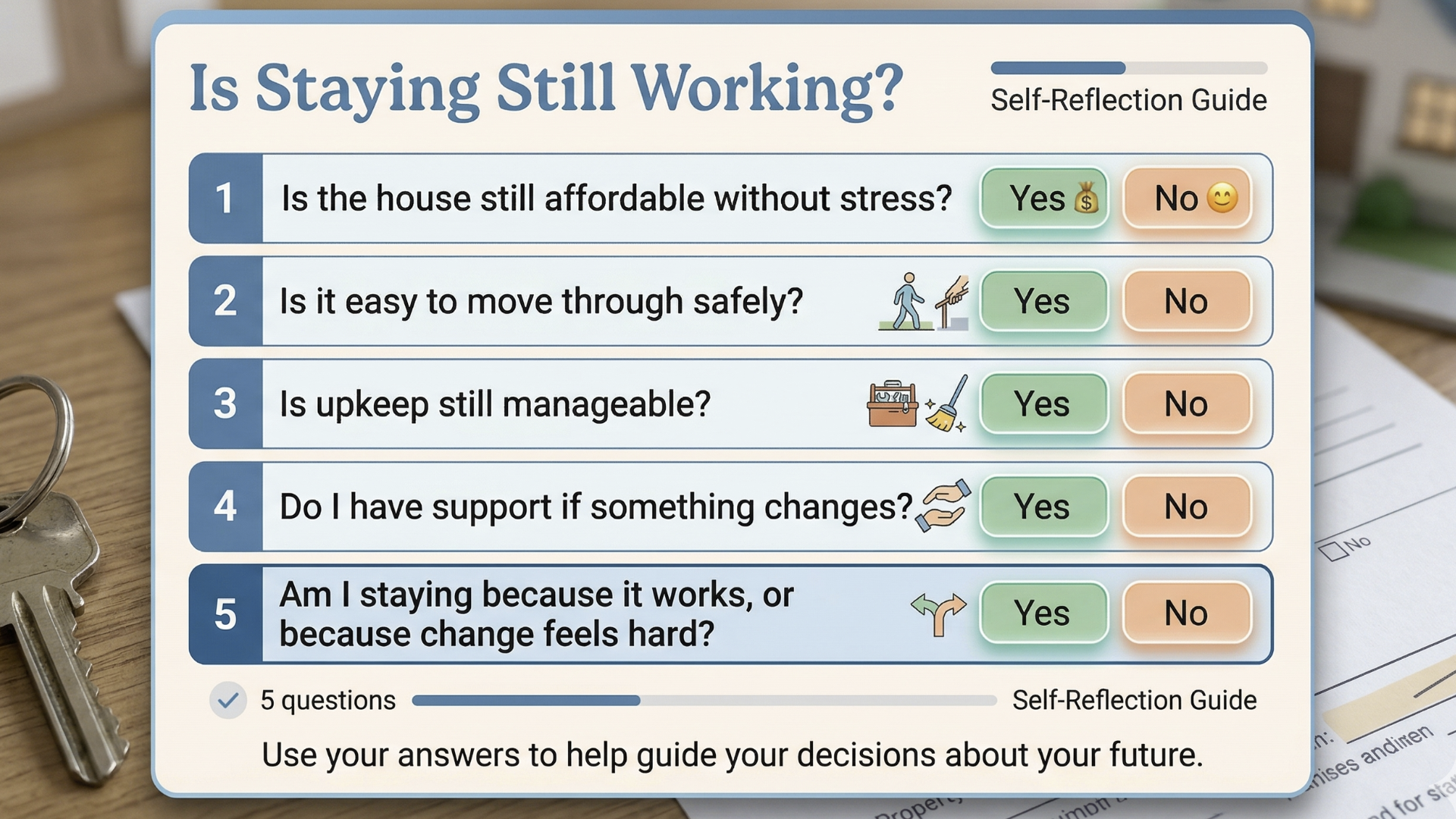
Sometimes staying makes sense because the house still fits your life well. Other times staying is driven more by emotion than practicality. That does not make it wrong. It just means it deserves honesty.
Ask yourself:
- Am I staying because the house truly works for me?
- Am I staying because I cannot picture the alternative?
- Am I keeping space for people who rarely use it?
- Am I attached to the memory of how the house used to function?
- Is the house supporting me, or am I constantly working around it?
You do not have to shame yourself out of staying. But long-term staying decisions get better when they are grounded in reality instead of habit.
9. Create Clear Thresholds for Re-Evaluating Later
Even if staying is the right choice today, that does not mean it will be the right choice forever.
That is why one of the smartest long-term strategies is to create simple thresholds that tell you when it is time to re-evaluate.
Examples might include:
- A major increase in taxes or insurance
- A large repair you no longer want to absorb
- A change in mobility
- A fall or medical event
- A shift in income
- A growing need for help with daily living
When you define those thresholds ahead of time, you are less likely to let the house make the decision for you during a stressful moment.
Long-Term Staying Works Best When It Is Intentional
There is nothing wrong with wanting to stay in your home. For many people, it is the right move. But staying works best when the decision is backed by strategy instead of wishful thinking.
If you plan to stay, focus on the things that actually determine whether the house will keep working for you: financial margin, physical safety, maintenance, simplification, support, and planning. That is what turns staying from a hope into a real plan.
- Staying in your home long-term should be treated like a strategy, not an automatic default
- The best staying plans address cost, safety, maintenance, clutter, and day-to-day usability
- Reducing physical friction early can make the home safer and easier to manage later
- Simplifying the amount of house you actively manage can reduce stress without requiring a move
- Support systems, organization, and decision thresholds make long-term staying more realistic
Related Reading
- If Moving Makes More Sense: Read the next-step guide for preparing for a future move without waiting for a crisis
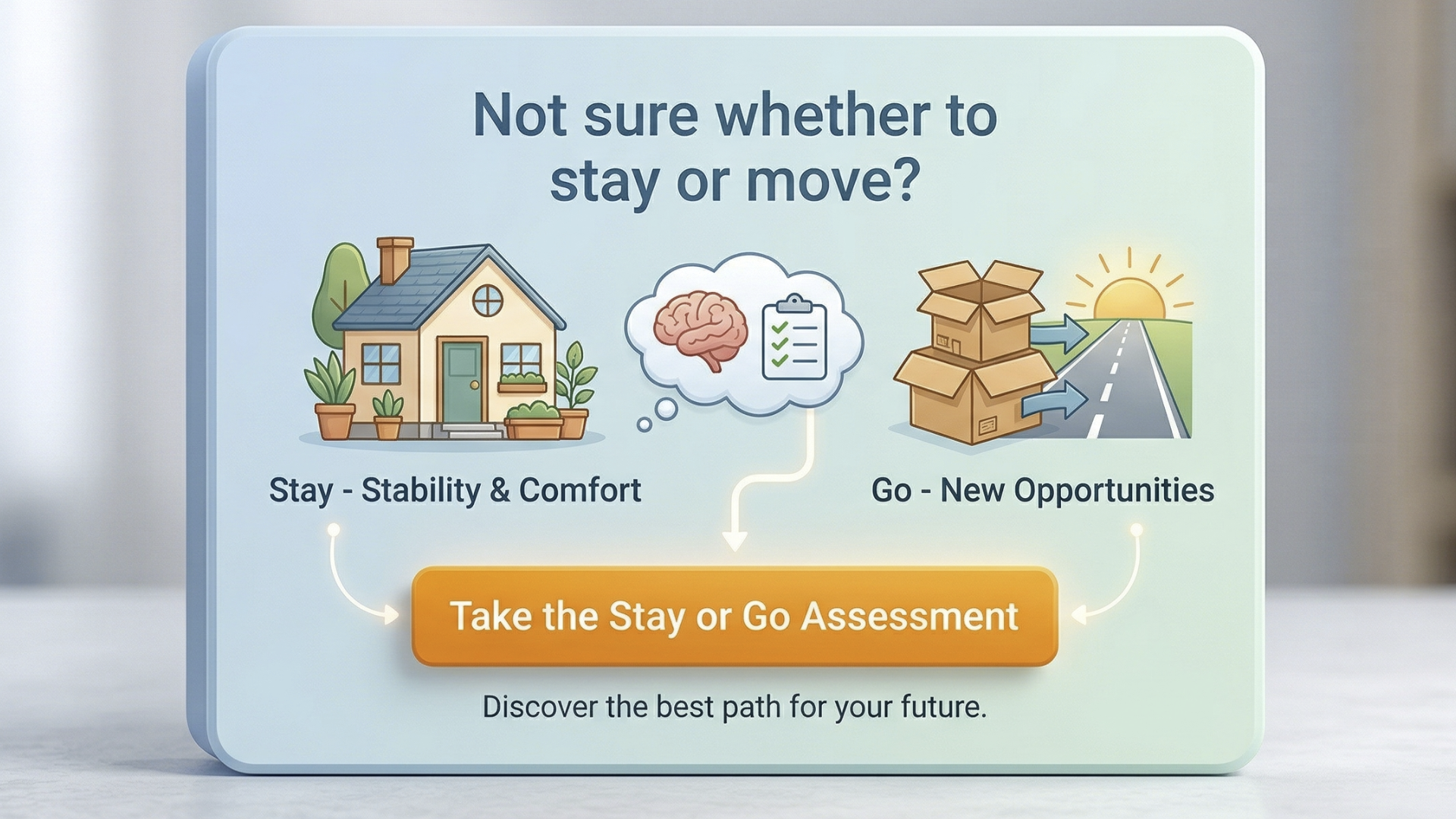
- Stay or Go Assessment: Take the assessment to see whether your current home still fits your next chapter
- Home Maintenance Planning: Learn how to separate critical repairs from cosmetic distractions