

Disclosure: Some links on this page are affiliate links, which means I may earn a commission if you choose to make a purchase through them, at no extra cost to you. As an Amazon Associate, I earn from qualifying purchases.
If Moving Makes More Sense, Start Before You Feel Ready
For a lot of homeowners, the move itself is not the hardest part. The hardest part is waiting too long to begin.
By the time some people finally decide to go, they are already dealing with too much at once: a repair bill they did not want, a house that has become physically harder to manage, rising costs, too much stuff, too many unfinished decisions, or a change in health or lifestyle that made the old setup harder to justify.
If moving makes more sense, the goal is not to rush. The goal is to prepare early enough that you still have options. A planned move is almost always easier, cleaner, and less expensive than a forced one.
If you are still not sure whether moving is the right call, read "Strategies If You Plan to Stay in Your Home Long-Term" before you commit to the move path.
This page is about the strategy behind that process: what to decide first, what to do next, what to ignore, and how to make the move without turning it into a bigger mess than it has to be.
1. Define What the Next Home Needs To Fix
Before you start decluttering, fixing the current house, or calling movers, get clear on what the next place actually needs to do better.
A lot of bad moves happen because people know they want out, but they have not defined what they are solving for. They leave one problem and walk right into another one with a different address.
Start by writing down the things the next home must improve. That might mean fewer stairs, less yard work, a better bathroom setup, lower monthly costs, less maintenance, better location, or a layout that fits the way you actually live now.
The point is simple: do not prepare to leave the old house until you know what the next house is supposed to fix.
- Maximum monthly payment you are comfortable with
- Maximum amount of exterior maintenance you want
- Whether stairs are acceptable or not
- How much square footage you truly need
- How close you want to be to family, stores, doctors, or services
- What features are non-negotiable for the next chapter of life
Helpful Planning Resources
- Move-planning binder – useful for keeping notes, listings, measurements, and replacement-home criteria in one place.
- 2-in-1 Digital Measuring tape – useful for furniture planning and making sure the next place actually works before the move.

2. Build the Real Move Budget Before You Spend Money Getting Ready
One of the biggest mistakes homeowners make is assuming the move budget will somehow work itself out later. It does not.
Before you spend money painting, fixing, packing, or hiring anyone, sit down and work through the real math. That means estimating what the current house may sell for, what it will cost to sell, what it will cost to prepare, what the move itself will cost, and what the next house will cost you in the first year.
That first-year number matters more than people think. If you are trying to understand why the current house may already be creating more pressure than expected, read: "The Five Hidden Forces Making Paid-Off Homes Unaffordable". Even if the next place is smaller, it may still come with higher taxes, higher insurance, HOA fees, new furniture needs, or updates you did not plan for.
The strategy here is not to create perfect math. It is to avoid fantasy math.
- Likely sale proceeds after selling costs
- Prep and repair costs before listing
- Moving expenses
- Closing costs on the next place
- Reserve for overlap, surprises, or delayed repairs
- First-year carrying cost of the replacement home
The clearer this number is, the less likely you are to spend money in the wrong places.
Helpful Budget and Paperwork Resources
- Accordion file – useful for estimates, receipts, repair quotes, and budget notes.
- Fireproof document box – keeps key records protected and easy to grab during the move.
3. Reduce What You Own Before the Move, Not During It
If moving makes more sense, one of the smartest strategies is to stop pretending you are going to sort everything later.
Later is where chaos lives.
The easiest way to make a move more expensive, more emotional, and more exhausting is to drag too much into it. A better plan is to declutter in waves before the timeline gets tight.
Do not try to clear the whole house in one giant weekend. That is how people burn out and quit halfway through. Work in zones. Start with the least emotional areas first. Use simple categories: keep, donate, sell, trash. If something has been sitting in a spare room, basement, attic, or garage for years and you already know it is not part of your next chapter, stop giving it a free ride to the next house.
Moving is expensive enough without paying to move things you do not want. If you are already feeling the emotional and practical weight of cutting down what you own, read: "10 Brutal Truths When DOWNSIZING Your Home".
- Start with storage rooms, closets, basements, and garages
- Sort one room or one zone at a time
- Separate sentimental items from general clutter
- Do not let guest-room overflow make decisions for you
- Handle paperwork and small loose items early
Helpful Decluttering and Sorting Resources
- Banker boxes – useful for sorting paperwork, keepsakes, and loose household items.
- Storage bins with lids – good for grouping keeps, donations, and category-based sorting.
- Heavy-duty moving bags – useful for clothes, linens, and quick cleanout passes.

4. Fix What Helps the Sale, Ignore What Does Not
Once people decide to move, many of them immediately start over-improving the house. That is usually a mistake.
The goal is not to turn your home into a magazine spread. The goal is to remove obvious problems, reduce distractions, and make the property easier to sell without dumping money into the wrong projects.
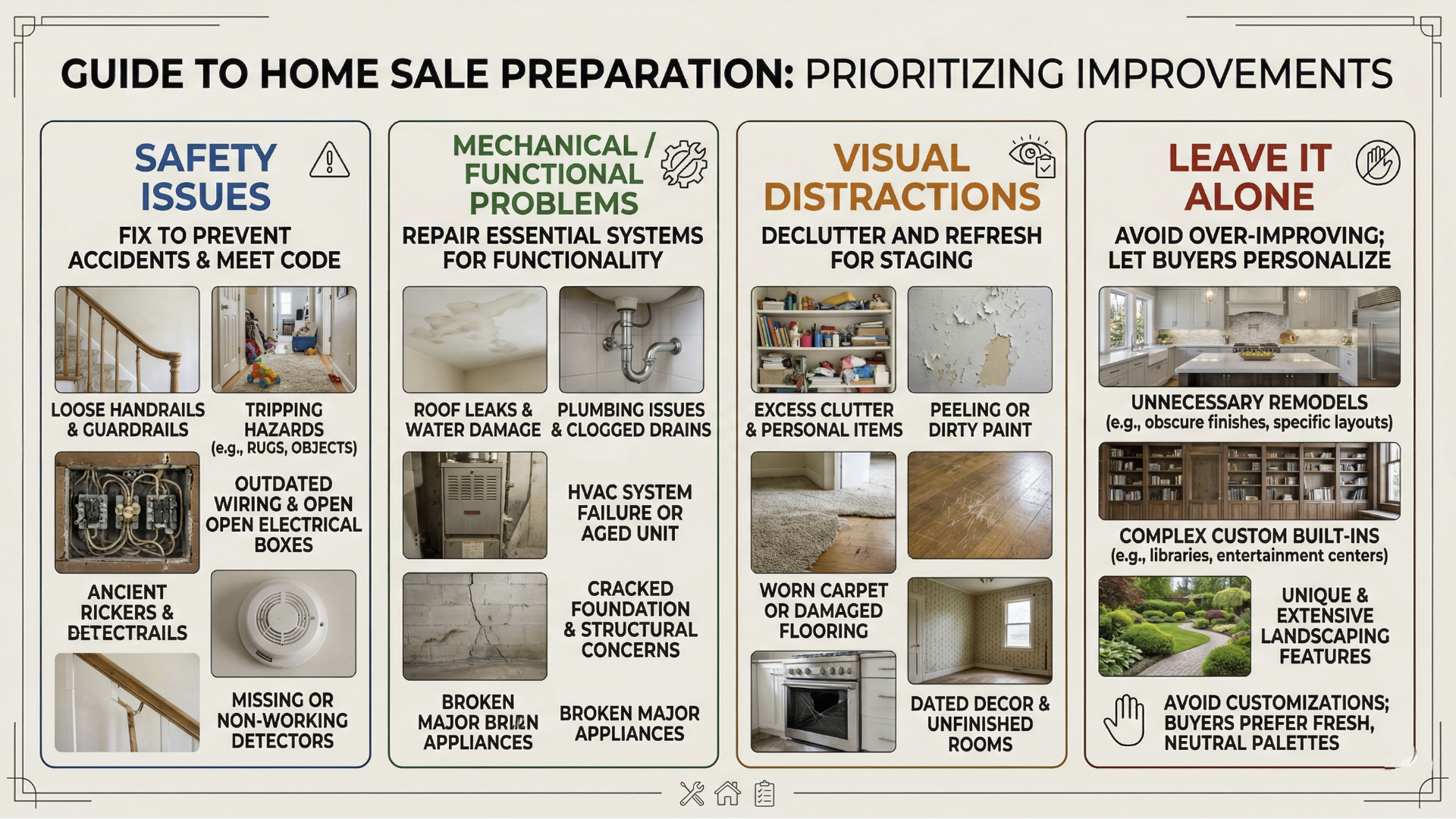
A better strategy is to split everything into four groups:
- Safety issues
- Mechanical or functional issues
- Visual distractions
- Things to leave alone
That gives you a filter.
Safety and mechanical problems usually deserve attention first. Visual distractions come after that. Random cosmetic projects that will not materially help the sale can wait or disappear from the list entirely.
People get into trouble when they start spending based on emotion instead of priority. If the roof, HVAC, lighting, old carpeting, peeling paint, or obvious clutter is the real issue, do not get distracted by some fantasy kitchen upgrade that does not solve the actual problem.
Helpful Home Prep Resources
- LED bulbs – an easy way to brighten dark rooms and reduce a tired look.
- Painter’s tape – useful for light prep work, patching, and touch-up projects.
5. Build One Move Control Center
Every move gets easier when there is one place where the important information lives.
That means one binder, one file box, one tote, one folder system, whatever format you will actually use. The point is to stop letting key paperwork live in five different drawers, old file cabinets, kitchen piles, and random desk stacks.
If you are moving, gather the documents and contacts that will matter most:
- Tax records
- Insurance information
- Utility account details
- Repair receipts and improvement records
- Contractor information
- Moving estimates
- Donation receipts
- Important medical or emergency contact information
- Closing paperwork and replacement-home notes
This does not sound exciting, but this is the kind of boring step that saves a lot of stress once the timeline tightens.
Helpful Move Control Center Resources
- Portable file box – useful for keeping all key paperwork in one place during the move.
- Label maker – makes folders, bins, and move categories easier to track.

6. Line Up Help Before the Calendar Gets Tight
A move becomes much more manageable when labor is planned early instead of improvised late.
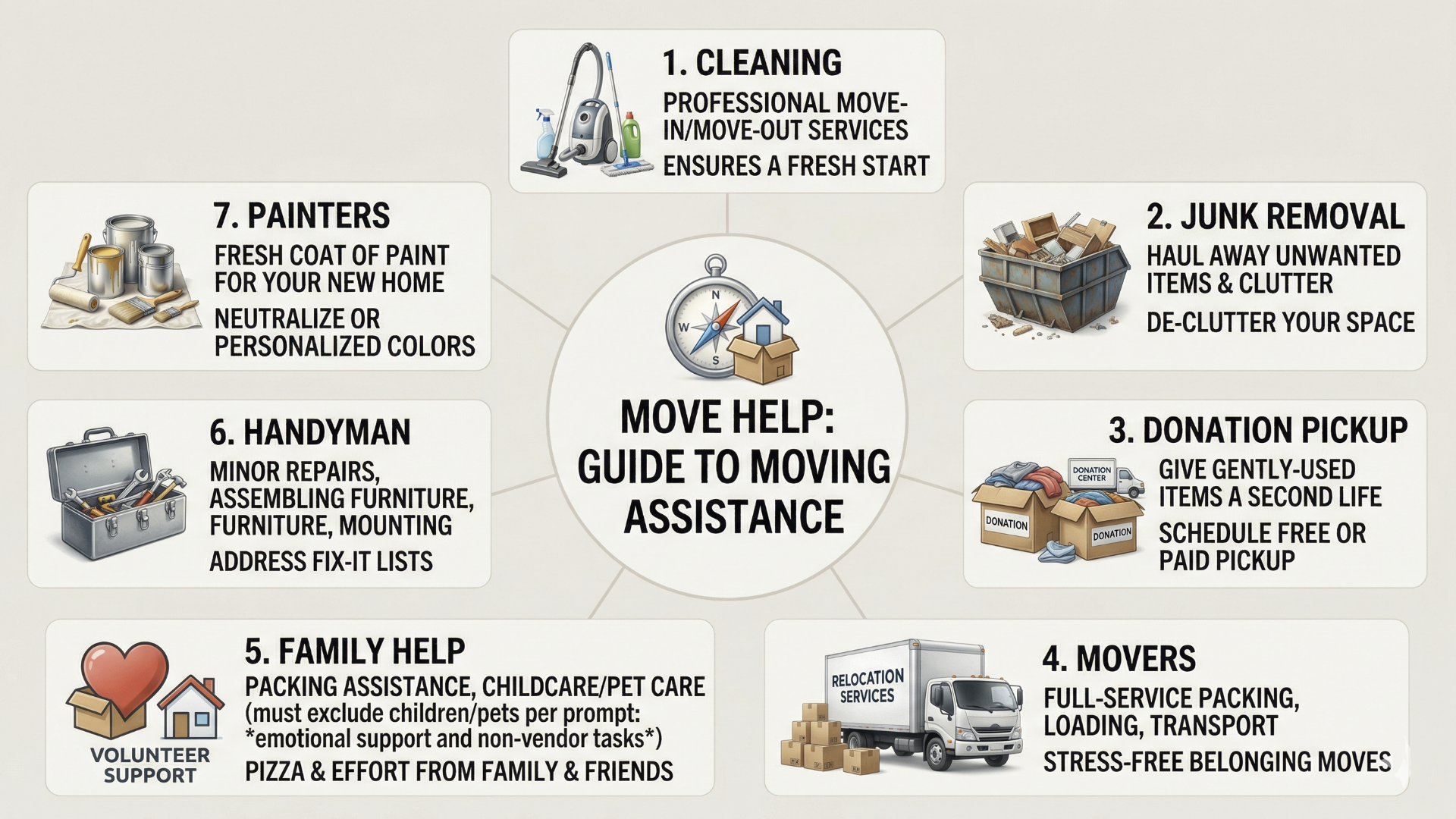
Do not wait until the last month to start calling movers, junk haulers, donation services, cleaners, handymen, or painters. That is when schedules get tighter, prices feel worse, and every decision feels heavier than it should.
Even if you are not ready to book everything, start figuring out what kind of help you will need and what you are willing to do yourself.
- Movers
- Junk removal
- Donation pickup
- Deep cleaning
- Light handyman work
- Painters
- Family help for sorting and packing
The more of this you know in advance, the less the move turns into a panic project.
Helpful Moving Supply Resources
- Packing tape – a basic must-have once the move timeline starts tightening.
- Tape gun – speeds up packing and makes box assembly less annoying.
- Furniture sliders – useful for moving heavier pieces with less strain.
7. Build a Move Timeline Instead of Letting the Move Build One for You
Many homeowners know they need to move but still operate as if they have endless time. Then everything hits at once.
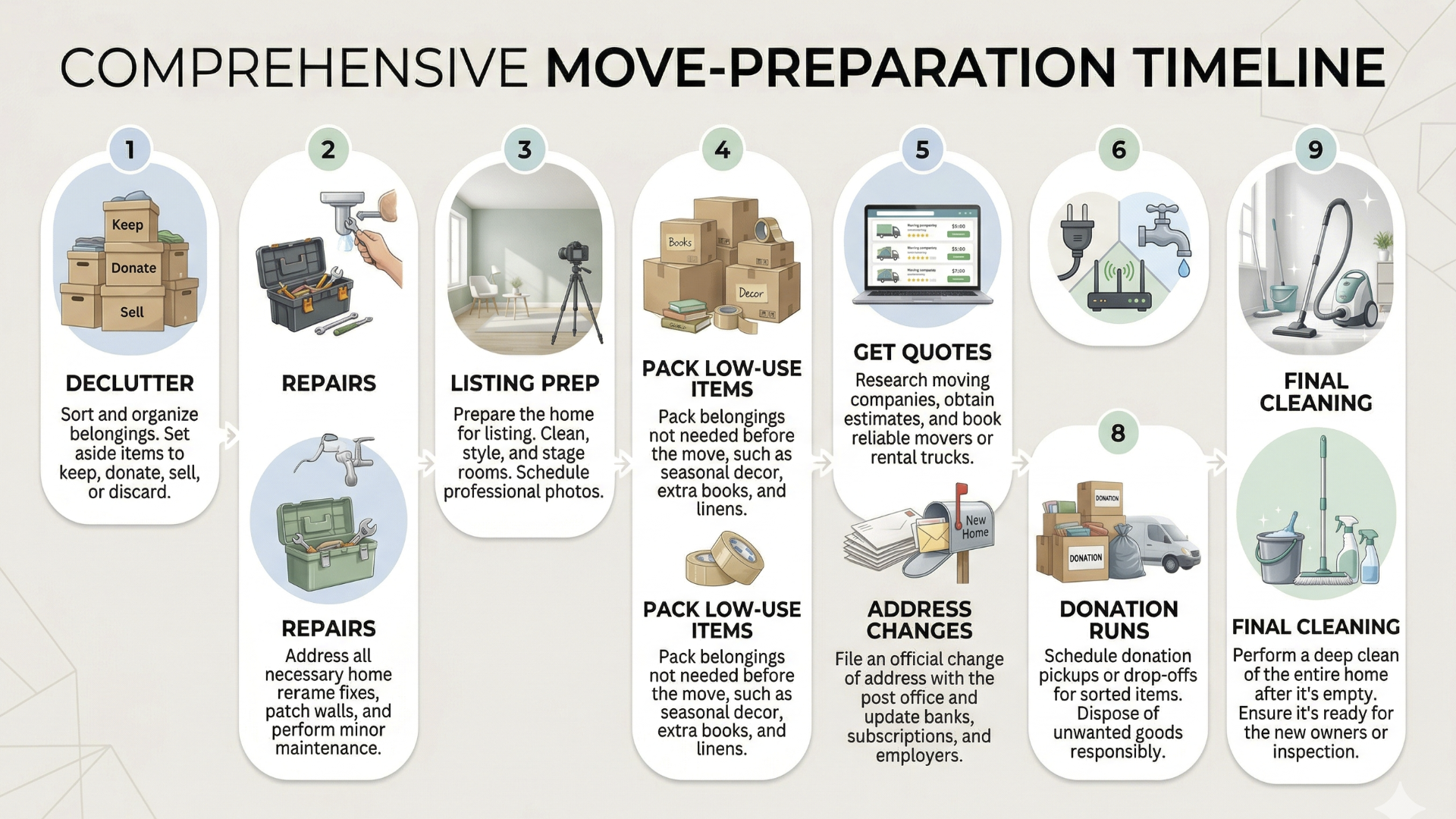
A better strategy is to create a simple timeline before you need it. Not a complicated color-coded spreadsheet you will never look at again. Just a real sequence of what needs to happen first, what needs to happen next, and what should already be finished before the last month.
Your timeline should account for:
- Decluttering
- Repairs
- Photos and listing preparation
- Packing low-use items
- Move quotes
- Utility changes
- Address changes
- Donation runs or pickups
- Final cleaning
If you build the sequence early, the move becomes a project. If you wait too long, it becomes a scramble.
Helpful Timeline and Tracking Resources
- Wall calendar – useful if you want the whole move timeline visible at a glance.
- Planner – helps track deadlines, bookings, utility changes, and task sequencing.
- File tabs or sticky note flags – useful for separating key papers and tracking what still needs to be done.
8. Pack for the First Week, Not Just the Moving Truck
One thing that makes moving miserable is acting like everything needs to arrive at once in one giant wave. It does not.
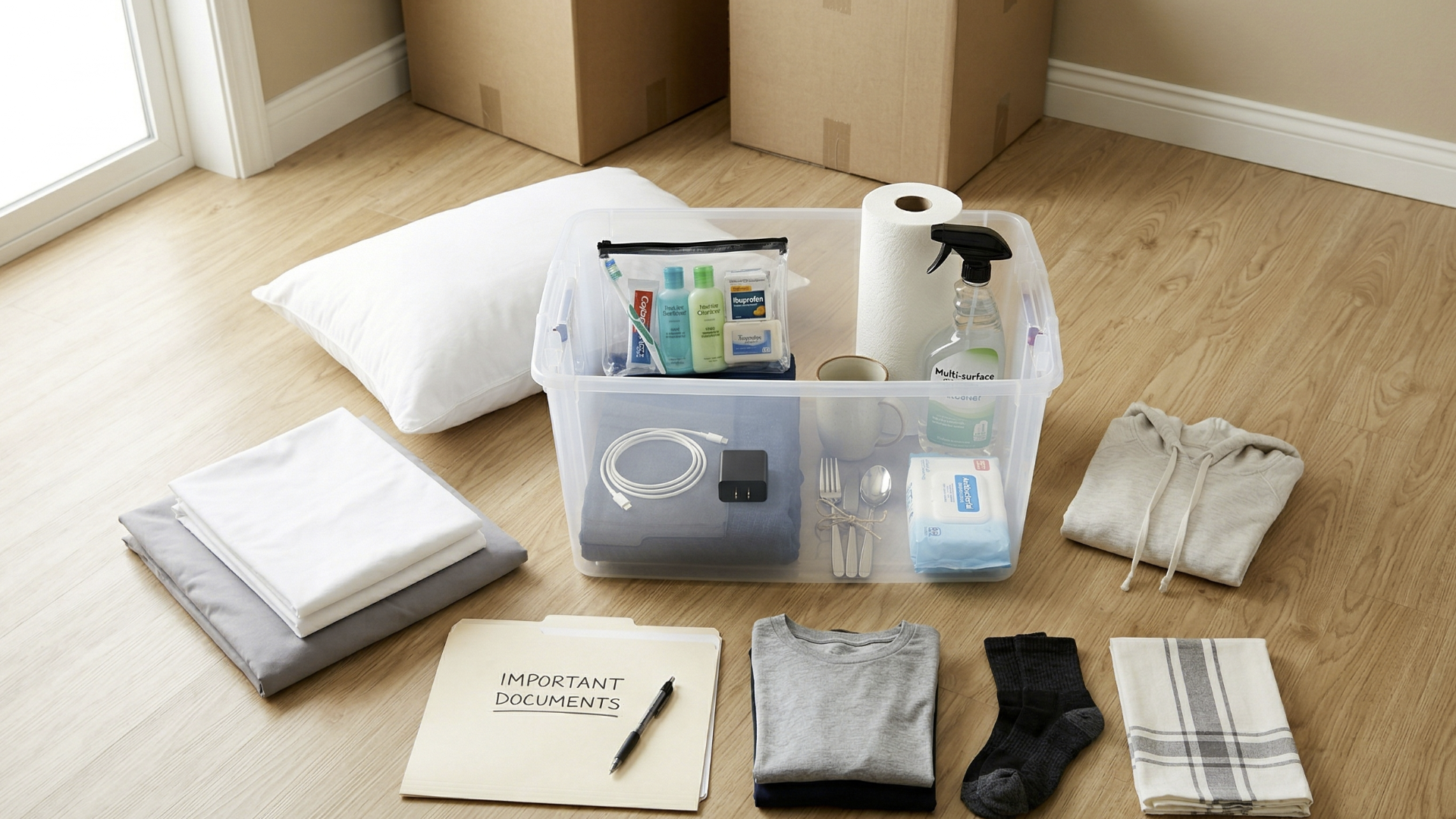
One of the best practical strategies is to stage the move so the first few days in the next place are easier. That means creating a separate group of essentials for the first week and keeping them easy to access.
That includes things like:
- Medications
- Toiletries
- Phone chargers
- Important paperwork
- Basic kitchen items
- Bedding
- A change of clothes
- Cleaning basics
- Bathroom basics
It sounds simple, but it keeps the first night and first week from feeling like a hunt through random boxes.
Helpful First-Week Moving Resources
- Clear totes – useful for first-week essentials you need to spot fast.
- Moving labels – helps separate priority boxes from everything else.
- Zip bags and small organizers – useful for cords, medicine, toiletries, and loose essentials.
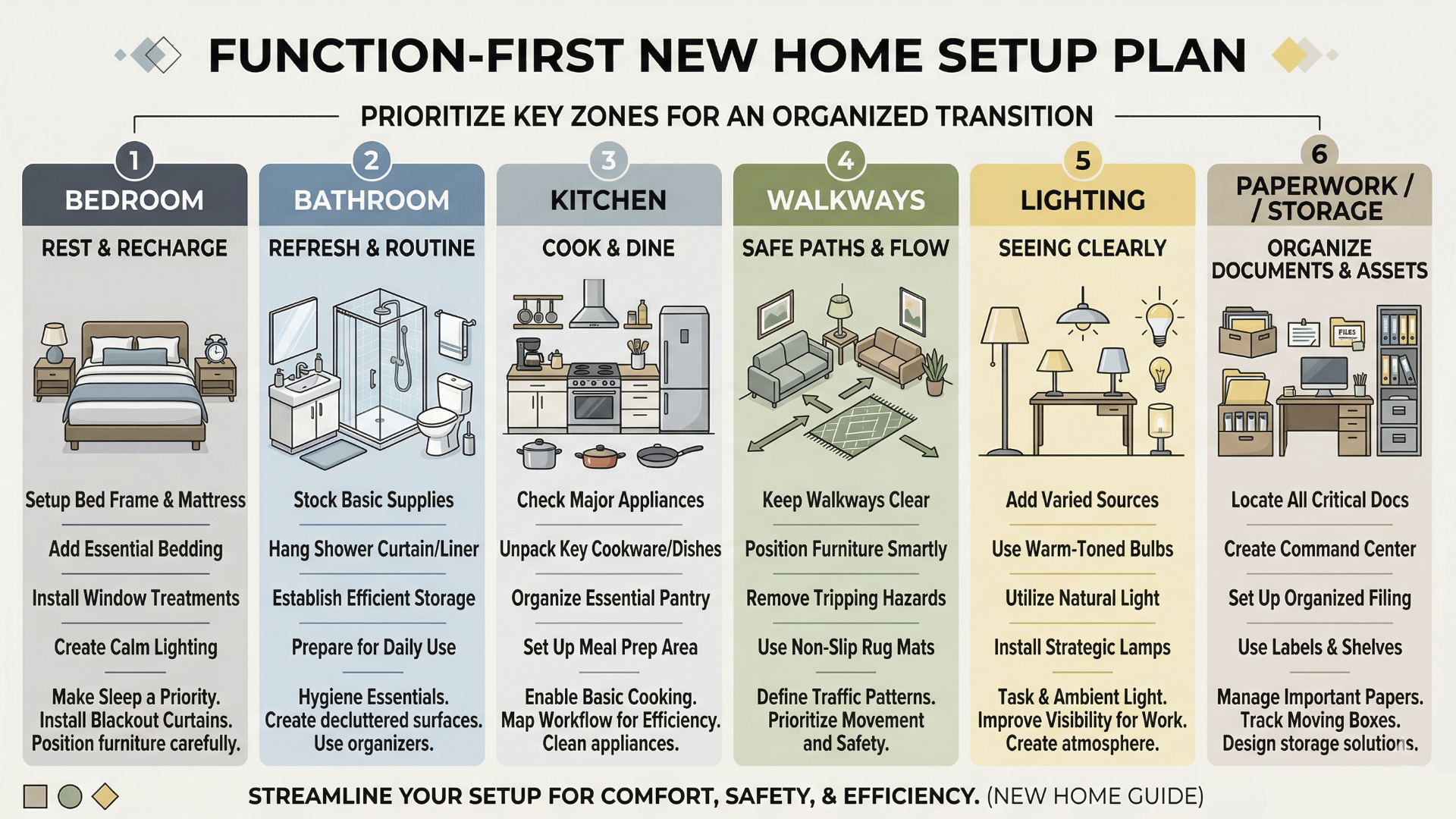
9. Set Up the Next House To Work Better Right Away
If the reason for moving is that the old house no longer fit your life well, then the new house needs to be set up with that in mind from the beginning.
That means the first priority is not decorating. The first priority is function.
Start with the spaces that affect daily life the most:
- Bedroom
- Bathroom
- Kitchen
- Main walkways
- Lighting
- Paperwork and storage
Make the new place easier to live in immediately. Reduce bending, reaching, awkward storage, and clutter buildup early. Do not carry old friction into a new address just because you were too tired to think about it during the move.
Helpful New-Home Setup Resources
- Drawer organizers – useful for keeping kitchen, bathroom, and bedroom storage under control from day one.
- Non-slip mats – helps make bathrooms, kitchens, and entry points safer right away.
- Night lights – useful for making the new place easier to navigate immediately.
10. Prepare Emotionally Too
Moves stall out for emotional reasons far more often than people admit.
Sometimes the house no longer fits. Sometimes the numbers no longer make sense. Sometimes the work no longer feels worth it. And yet people still delay because the house holds history, identity, routines, memories, and a version of life they are not fully ready to let go of.
That does not make the move wrong. It just means the emotional side needs to be acknowledged instead of ignored.
If moving makes more sense, it helps to be honest about what you are actually leaving and what you are actually trying to gain. Sometimes the real goal is not just a smaller house. Sometimes it is less stress, less cost, less upkeep, less physical strain, and more margin to live the next chapter more comfortably.
11. Decide What Would Happen If You Wait Too Long
A lot of good moving decisions die by drift. Not because moving was the wrong move, but because people kept postponing it until the choice got smaller and the move got harder.
If you are on the fence, ask yourself a few blunt questions:
- What gets harder if I wait two more years?
- What repair or cost increase would force this decision later?
- Would I rather move while I still have energy and options, or after a stressful event narrows both?
- What am I hoping will change if I wait?
The point is not to scare yourself into action. The point is to recognize that waiting is also a decision, and it has costs too.
A Planned Move Usually Beats a Forced One
If moving makes more sense, the smartest thing you can do is start before the pressure gets worse.
You do not need to do everything today. But you do need a real sequence: define what the next home needs to fix, know the budget, reduce what you own, organize paperwork, decide what repairs matter, line up help, and make the next place easier from the beginning.
That is how a move becomes manageable. Not easy, maybe, but manageable. And that is a lot better than waiting until the house, the budget, or life itself makes the decision for you.
- Moving works best when it starts before a repair, cost spike, or life event forces the issue
- The next home should solve real problems, not just provide a new address
- Clear move math helps prevent overspending and bad assumptions
- Decluttering before the timeline tightens reduces stress and moving costs
- Organizing paperwork and lining up help early makes the whole process easier to control
- The first priority in the next home is function, not decoration
Related Reading
- If You Plan to Stay: Read the long-term staying strategy guide for safety, maintenance, simplification, and aging-in-place planning
- Stay or Go Assessment: Take the assessment to see whether your current home still fits your next chapter
- Paid-Off Home Reality: Learn why a house can still create pressure even after the mortgage is gone